4‑Way Bunk Bed Configurations for Small Spaces
You’re looking at 4‑way bunk bed configurations to maximize a small space, and you’ve hit on the perfect solution. The stacked quad (2×2) is your most compact choice, fitting in about 80 inches wide. For awkward rooms, an L‑shaped arrangement frees up floor space by tucking beds into a corner. Just remember you’ll need at least an 8‑foot ceiling and 36 inches of walking room around it. Let’s break down which layout actually works for your room.
What Is a Quad Bunk Bed?
You’re probably wondering, “a bunk bed with four beds in one unit…how does that even work?” Obviously, it’s a space-saving powerhouse, ideal for squeezing in kids, guests, or vacation rentals. For compact definitions, think of it as a single furniture piece holding four sleeping surfaces, often in stacked, L-shaped, or loft designs. Many top models are specifically designed to align with different family needs and room layouts.
Here’s the thing: you’ll hear alternate terminology like quadruple bunk or 4-way bunk. They all mean the same core concept. It’s not just for tiny rooms, either. These units often use solid wood construction, supporting significant weight for durability. When selecting a model, prioritizing verified safety features is crucial for a secure sleeping environment. Common configurations to maximize space efficiency include twin‑over‑twin, L‑shaped, and modular designs.
Your key takeaway? It’s a smart solution for maximizing sleeping capacity without spreading multiple beds across your floor. Now, you’ll need to see if it physically fits your space.
Will a Quad Bunk Fit Your Room? (How to Measure)
Now, let’s tackle the core question: will that impressive quad bunk actually fit? You grab your tape measure first. Obviously, you start with ceiling height; you need at least 30 inches above the top mattress. When measuring, be sure to account for the mattress thickness itself, as this will impact your final clearance for sitting underneath the elevated beds. Ensuring sufficient headroom is crucial for comfortable and safe daily use, so consulting a loft bed height guide for standard platform ranges is a wise first step.
Here’s the thing: check for a ceiling fan clearance. Measure from the floor to the lowest fan blade, not just the ceiling. This dictates your bunk’s maximum safe height.
Next, map the floor. Outline the bed’s footprint with painter’s tape. Guarantee the door swing arc remains completely clear. Now check for 36 inches of walking space around your taped outline. Your room must work around these permanent features. Consider using a lower-profile mattress or adjustable bed frames to maximize usable space below. If you clear these hurdles, you’re ready to explore specific configurations.
The Space-Saving Stacked Quad (2×2)
Since you’ve already measured and are wondering if a quad bunk can fit your specific space, let’s look at the most space-efficient layout: the stacked 2×2. You place two standard bunks side-by-side. This creates a compact footprint, typically 80–86 inches wide. It’s ideal for a rectangular room.
What makes it so space-efficient?
Obviously, it stacks four beds vertically and horizontally. You get the highest beds-per-square-foot ratio. Just verify you have 8–9 feet of ceiling height for safe clearance, which is a key safety standard for bunk beds. The standard twin‑over‑twin bunk bed height is a useful reference point for planning overall clearance.
What should you plan for?
Your mattress sourcing matters. Use low-profile types for proper guardrail safety on top bunks. Assembly logistics are significant, requiring reinforced joints for stability. Plan for two straight ladders. For maximum safety and durability, prioritize models with a sturdy metal frame or similarly robust construction, and always adhere to manufacturer‑specified weight limits.
This configuration maximizes a tight floor plan. Next, consider if your room’s shape allows this rectangular block.

Includes: Set includes 2 camping cots and 2 carry bags for hassle-free transport, a set of stack adapters (2 in each bag) for flexible configuration, and 2 locking straps (1 in each bag) for added security
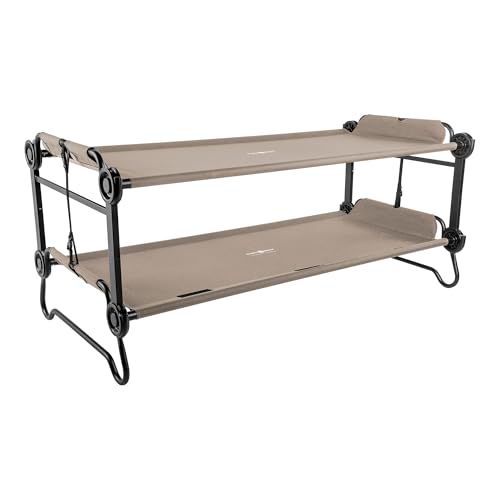
Includes: Set includes 2 camping cots and 2 carry bags for hassle-free transport, a set of stack adapters (2 in each bag) for flexible configuration, and 2 locking straps (1 in each bag) for added security

INCLUDES: The set includes 2 cots with head & foot to keep pillow in place, 2 carry bags for hassle-free transport, a set of stack adapters (2 in each bag) for flexible configuration, and 2 locking straps (1 in each bag) for added security.
The L-Shaped Quad Bunk Arrangement
While you’re figuring out if a standard stacked quad is too tight for your room’s shape, an L-shaped quad bunk arrangement could be the perfect puzzle piece. It tucks two bunks into a corner, freeing your central floor space. Now, this layout is a champion for sleepover advantages. It easily sleeps four, often using Twin XL mattresses for growing kids. Each top bunk gets its own ladder for independent access, and sturdy safety rails are a non-negotiable feature for secure top bunks.
You’ll build lasting childhood memories here without sacrificing safety or space. The design fits rooms as tight as roughly 138 by 104 inches. It maximizes awkward layouts better than linear bunks. Obviously, you’ll gain extra storage underneath, too. So if your room has a suitable corner, this configuration smartly balances community and personal space, letting you utilize every inch. This cost-effective sleeping solution is ideal for siblings or frequent guests. For even larger families or rental properties, some L-shaped designs can be modified to sleep up to five by incorporating a lower full bed alongside the twin bunks. This adaptability makes them a versatile choice not only for homes, but also for vacation rentals aiming to maximize occupancy.

【Industrial Quad bunk bed 】With vintage wood and gold painting accent decorate,this l shaped bunk bed fits seamlessly into any bedroom decor, adding a touch of style along with its practical functionality.Minimalist style and Industrial design easy to accommodate with other bedroom furniture.

🥇【Quad Bunk Bed for 4】This twin over twin bunk beds provides four separate sleeping areas at the same time, and through the efficiency of vertical space, it is able to save the use of the floor area, whether it is a family with many children, a vacation home, or temporary entertaining guests, this bed is a great choice!

[L-Shaped Quad Bunk Beds] The bed frame is equipped with multi-tier open shelves on the side. Each tier has a moderate size, suitable for placing books, daily necessities, small storage boxes, and other items. This allows frequently used items to be within easy reach without the need to purchase additional storage furniture, thereby reducing space idleness and waste to a certain extent.
Vertical Quad Bunks for High Ceilings
If an L-shaped quad uses your room’s corners, a vertical quad bunk stack uses your ceiling height. It builds four beds in one column, saving all your floor space. You’ll need at least an 8-foot ceiling. Taller is better for ventilation.
You must address vertical accessibility considerations. Stairs are safer than ladders for this height. Enclosed upper bunks prevent falls. Now, heat rises, so you need thermal stratification solutions. Added fans or vents stop the top bunk from overheating. When selecting a model, prioritize a sturdy reinforced steel frame to safely support the weight of multiple adults. Confirm the structure meets or exceeds industry standards for weight capacity. Always consult the manufacturer’s load specifications before purchase.
This design gives you back about 80% of your room’s floor area. Use it for desks or storage. Your primary constraint is height, not square footage. Ready to see which configuration fits your actual room?

Convertible Triple Bunk Beds:With a practical design,this twin size bunk beds for kids can be divided into separate twin bed and Twin Over Twin Bunk bed,put them in different rooms when your children grow up.

[L-Shaped Quad Bunk Beds] The bed frame is equipped with multi-tier open shelves on the side. Each tier has a moderate size, suitable for placing books, daily necessities, small storage boxes, and other items. This allows frequently used items to be within easy reach without the need to purchase additional storage furniture, thereby reducing space idleness and waste to a certain extent.

SPACE-SAVING BUNK BED—Optimize your space with our triple bunk bed! This L-shaped bunk beds for 4 boys/girls is the suitable solution for cottages, multi-child families, out-of-town guests, or hosting friends or sleepovers. Functional and aesthetic, this bunk bed will accommodate small-space living without compromising on style
Which Quad Bunk Configuration Is Best for Your Space?
So, you’ve got the space for quad bunks, but how do you pick the right layout for your room? Start with your room’s exact shape and ceiling height. Obviously, a stacked 2×2 fits best in a standard rectangular room under 9 feet tall, maximizing beds per square foot. For a corner with doors or windows, an L-shape frees your central floor area. Lofted designs need 9-10 foot ceilings to create under-bed space for a desk, while a standard twin bed offers simpler installation for single sleepers. Now, consider your sleepers. Mixed-size configurations offer great design customization, letting you combine twin and full beds for different aged kids, and you should verify each bed’s weight capacity to ensure safety for adult occupants. You’ll also want to check the materials durability since these are complex, long-term structures. Before finalizing your choice, carefully weigh the significant safety and accessibility concerns against the space-saving benefits. Your perfect configuration balances these practical limits with your specific needs.
Built-In Storage for Quad Bunk Beds
When you’re fitting four beds into one room, figuring out where to stash all the clothes and gear is your next big puzzle—let’s solve it with built-in storage.
You’ll get drawers built right into the staircase steps or the bed frame itself. Their drawer materials, like solid hardwood, prevent sagging and handle heavy use. This eliminates separate dressers. When evaluating models, it’s also crucial to check the durability and weight limits for long-term reliability, and opt for designs featuring smooth-glide mechanisms for easier use by kids.
Here’s the thing: smart organizational systems are key. You’ll customize compartments for different items. Staircase drawers let you sort gear by frequency of use. That maximizes every inch.
Your takeaway? Built-ins make the quad bunk’s compact footprint work. They turn unused space into functional storage, keeping everything organized and within reach. Now, how do you keep all those beds safe?

🥇【Quad Bunk Bed for 4】This twin over twin bunk beds provides four separate sleeping areas at the same time, and through the efficiency of vertical space, it is able to save the use of the floor area, whether it is a family with many children, a vacation home, or temporary entertaining guests, this bed is a great choice!
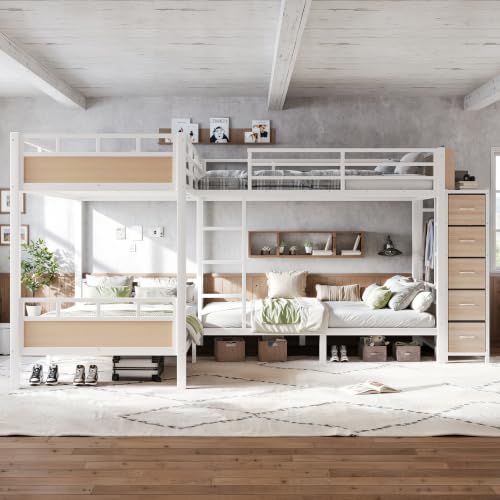
Quadruple Twin Bed for 4 Sleepers: This spacious quadruple bunk bed features four twin-size sleeping surfaces, making it ideal for large families, shared kids' rooms, or sleepovers. The smart layout combines upper and lower bunks to accommodate four people while saving valuable floor space, perfect for maximizing room utility.

[Quad Twin Bunk Bed for 4 Sleepers] This quad twin metal bunk bed features four twin-size sleeping spaces, making it an ideal solution for large families, shared bedrooms, dormitories, or sleepovers. The smart stacked layout efficiently maximizes vertical space while providing comfortable sleeping arrangements for up to four people.
Essential Quad Bunk Safety Features
With storage sorted, your next logical question is, “How do I make sure this setup is safe for everyone?” You’re right to focus on this, as a quad bunk’s height and weight capacity demand specific features.
First, guardrails are non-negotiable. They must stand at least 5 inches above the mattress surface, with minimal gaps. Here’s the thing: your mattress materials matter. A thicker mattress raises the sleeping surface, effectively lowering the guardrail’s protective height. Check this during your assembly timeline.
Second, secure that ladder. It must be fixed to the frame with wide, flat rungs for good footing. Obviously, structural integrity is key. The bed must comply with safety standards, supporting 250-300 lbs per bunk with zero wobble. Factor this sturdiness into your assembly timeline, as rushing risks a shaky frame.
Your takeaway: never compromise on these tested safety fundamentals.
Who Needs a Quad Bunk Bed? (Ideal Use Cases)
Now that you’ve got a handle on safety, you might be wondering, “Is a quad bunk even right for my situation?” All right, here’s the deal: if you need to fit four people into a room without it feeling like a mattress warehouse, a quad bunk is your secret weapon. Crowded homes, from small apartments to bustling vacation cabins, obviously benefit. It lets siblings or guests sleep comfortably without losing floor space. Queen beds squared with wall to ensure proper drawer function, making them ideal for bedrooms with tight floor plans. Think beyond homes, too. Youth hostels and emergency shelters use them for efficient, compact accommodations. You maximize capacity in critical situations. Essentially, you need one anytime sleeping space is scarce but occupant numbers aren’t. It’s about efficient density. Now, how do you pick the right one?
Shopping for Your Quad Bunk Bed
Always verify side rails, weight limits, and age guidelines. Opt for low-profile, 5-inch mattresses for vital headroom. Finally, factor delivery and assembly into your plan. Your key takeaway? Measure meticulously, then balance material quality with total cost for a safe, long-term solution.

EASY SETUP: This gel memory foam mattress is rolled, compressed, and boxed for convenient delivery and setup. simply unpack the mattress and allow the mattress to decompress for 48-72 hours

Adaptive Memory Foam Structure: Memory foam responds to body weight and temperature to match body curves. The foam features gradual rebound and reshapes naturally when body positions shift to deliver steady surface support. Weight is distributed evenly across the mattress surface for balanced contact during rest.
Adaptive Memory Foam Structure: Memory foam responds to body weight and temperature to match body curves. The foam features gradual rebound and reshapes naturally when body positions shift to deliver steady surface support. Weight is distributed evenly across the mattress surface for balanced contact during rest.