
How High Are Loft Beds? A Guide to Standard Heights
You’ve got the right question, because there’s no single standard height—it’s all about your ceiling! For a typical 8-foot ceiling, you’ll aim for a mid-loft bed around 66–70 inches tall. That leaves you roughly 35–40 inches of clear space underneath and the required 30+ inches of safety clearance above the mattress. Your perfect height depends on what you want underneath, which we can map out together.
What Is the “Standard” Loft Bed Height?
You’re right to question what “standard” really means here, because there isn’t one single measurement. You’ll often see a typical range of 60 to 80 inches tall overall. This span exists because the true standard is your room itself, specifically your ceiling height. Ignore simple bunk comparisons, as loft heights directly tie to your space. For an 8-foot ceiling, a standard adult setup aims for about 50 inches of under-bed space. Your ceiling materials matter, too, as hitting a hard surface like drywall or plaster isn’t safe. Obviously, you need that essential 30+ inches above the mattress. So, “standard” is a starting point you then customize. Manufacturers often provide quick reference tables to compare these common dimensions. Your key takeaway: measure your ceiling first, as it dictates your safe and comfortable height options, and always consider the headroom for sitting you’ll need in the space below. Always verify your selected model meets the relevant safety standards for guardrails and structure. Next, you’ll break down those specific loft categories.

Loft Bed with Storage and Stairs: The heavy-duty loft system combines full bed and four-step stairs shelves and a compact wardrobe all in one furniture piece. Sleek and space-saving design adds a touch of elegance to any bedroom. Suitable for any living environments, like children's bedrooms, universities, residential treatment facilities, and bunkhouses

【SOLID & STURDY BED FRAME】Constructed by 100% solid pine wood with white paint finish, this kids loft bed features 1 center beams, full-length guardrail and wood slat support, all these enhance this full loft bed load capacity to 264.55 LBS

Strong frame: Adopt square frame structure stronger to make the bed frame more stable, the maximum bearing capacity can reach 400 lbs.
Loft Bed Height Categories: Low, Mid, High, & Extra High
Breaking down loft beds into low, mid, high, and extra-high categories clears up the height confusion. You’re not getting one generic answer. You’re choosing a tool for space utilization.
Now, low lofts (54”-65” tall) maximize headroom in short-ceiling rooms. Their accessibility features suit younger kids, making them a prime example of smart space‑saving furniture for compact rooms. Mid lofts (66”-70”) fit standard 8-foot ceilings and create a desk space underneath. That’s a classic study zone. Many models in this range come with an integrated desk for a complete workstation.
High lofts (71”-73”) work with 8-9’ ceilings, offering generous under-bed room. Finally, extra-high versions (74”+) need over 9-foot ceilings but create entire activity nooks below. Here’s your takeaway: category choice dictates what fits underneath and above your bed, which directly solves your space puzzle. Always verify the load‑bearing capacity and frame material of your chosen model for long-term safety and durability.
Choosing the Right Height: Your Child’s Age and Your Ceiling
Now, after seeing the categories, you might wonder how to actually pick one for your kid’s room. You need to balance their age and your room’s ceiling clearance.
How do age recommendations guide my choice?
Start with age recommendations. Kids under six need low lofts, while tweens can handle standard or mid heights. Older teens are safe with high lofts. Your child’s climbing maturity matters. This focus on age suitability directly addresses key safety risks for children associated with loft beds. A secure ladder or stairs, properly anchored during assembly, is essential for safe daily access.
Why is ceiling clearance so critical?
Don’t forget the ceiling. Maintain at least 30 inches of clearance from the mattress top. This lets them sit up safely. With an 8-foot ceiling, subtract 33 inches to find your maximum bed frame height. Proper clearance is a key part of planning and safety considerations for any loft bed project. You can also look for a loft model with a sturdy integrated slide for added fun without compromising safety or space efficiency.
Match their age to a type, then verify it fits your ceiling. Next, you’ll measure your actual space.

【Enhanced Safety for Kids】This low loft bed features a 13.8" extended guardrail, a heavy-duty metal frame up to 400 lbs, rounded corners, anti-toppling device, and a wide ladder with soft foam padding makes climbing safer for little feet. Fits 4–6" mattresses to keep children securely in place through the night.

Enhanced Safety Low Loft Bed for Kids: Designed for ultimate safety, this low loft bed combines a secure low-profile structure with rounded corners to prevent bumps and injuries. The 15.8” full-length guardrail and anti-tip fixtures provide maximum stability, making it ideal as a toddler loft bed or functional loft bed with desk. For optimal safety, ensure the mattress remains at least 5″ below the guardrail. A perfect bed for kids that prioritizes security and comfort
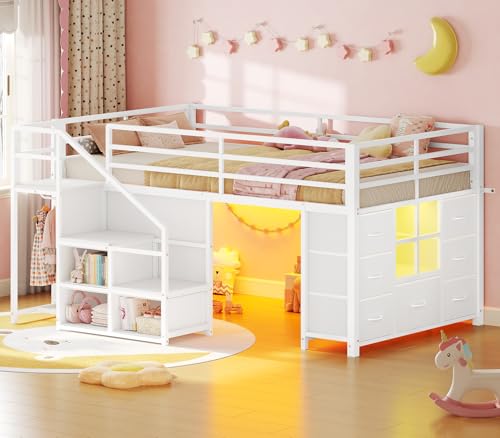
【Staircase Design: For Safer, Easier Access】The stairs of this low loft bed are securely attached to the bed frame, eliminating any risk of wobbling. Each step is sufficiently wide and sturdy, allowing children to step firmly when climbing up or down without straining to reach. This design prevents the risk of missing a step or slipping, which can occur when climbing a ladder. The safety handrail provides extra support and confidence, especially during sleepy nights or when playing excitedly
Calculating Your True Under-Bed Clearance Space
Here’s how you get a real number for that space underneath, because it’s more than just the leg height. You must subtract the platform’s bulk. Leg height is your starting point, but that measured post doesn’t account for the bed’s foundation.
Those unused formulas often omit neglected factors like the slats and frame. Your true clearance equals leg height minus the platform frame (2-4 inches) and the slat thickness (2 inches). So with 72-inch legs, you actually gain about 68 inches of open air below the structure. That’s your real workspace before you even add a mattress. This precise planning is similar to the initial step in a building project where measuring the space ensures everything fits. Carefully checking a product’s maximum load capacity before purchasing is also a critical safety and planning step, and consulting building codes or a professional is advised for custom designs or heavy use.
Now compare this to your ceiling and needs. This precise number lets you plan for a desk or storage confidently. Next, you’ll see how your mattress choice changes the final sleeping height.
How Mattress Thickness Changes Your Loft Bed’s Height
You’ve got your true under-bed clearance nailed down, but you’re probably wondering how much room you’ll actually have to sit up in bed. Here’s the thing: your mattress thickness directly eats into that headroom.
It adds its full height to the loft’s total. A standard 8-inch mattress raises your sleeping surface exactly that much from the platform. Now, your mattress density and material compression matter slightly, but don’t bank on much sinkage for height calculations. Use the full, firm thickness. This is similar to the considerations for Murphy bed mattresses where thickness critically impacts the folding mechanism.
For an 8-foot ceiling, that often means choosing a low-profile mattress. You need at least 30 inches to the ceiling. This choice directly trades mattress plushness for essential sitting-up space. When selecting a thinner profile, prioritize models with good edge support for safety and durability. So, always measure your actual mattress first.

BUNKIE BOARD adds extra support under the mattress to help prevent the mattress from sagging bringing life to an old uncomfortable mattress

Adaptive Memory Foam Structure: Memory foam responds to body weight and temperature to match body curves. The foam features gradual rebound and reshapes naturally when body positions shift to deliver steady surface support. Weight is distributed evenly across the mattress surface for balanced contact during rest.

Stable Support: The 7mm bunkie board full size uses high-density polymer for long-lasting, stable mattress support that prevents sagging.
Safety First: Guardrail Height and Leg Stability Rules
Since you’re figuring out how a mattress changes your bed’s height, you’re probably wondering if that also affects your safety up there—obviously, it does.
First, you must maintain a 5-inch guardrail above your mattress top. A standard 14.5-inch rail loses height with a thick mattress. Add 3 or 6-inch extenders for mattresses over 9.5 inches. This prevents falls from nightly movement. Next, check all gaps. Openings must be under 6 inches or over 9 to avoid entrapment, essential for following age restrictions. Safety experts generally recommend that children be at least six years old before using a loft or bunk bed to ensure they can safely navigate the ladder and understand these dangers. Finally, test stability. Push on the frame; legs shouldn’t wobble. The Consumer Product Safety Commission reports over 71,000 related injuries annually, making these rules indispensable. Parents should also incorporate regular safety inspections into their routine to check for loose hardware or wear, and they should ensure the bed’s weight limits are strictly observed to prevent structural strain.
Your clear takeaway: measure your actual setup and prioritize these guards.
Can You Use a High Loft Bed With an 8-Foot Ceiling?
Well, you’re probably wondering if cramming a high loft bed into your 8-foot ceiling will even work. Yes, but it’s tight. Your ceiling gives you 96 inches. A typical high loft is about 71 inches tall, leaving only 25 inches for your mattress and the required 30-inch headroom. Always verify the manufacturer’s stated weight capacity to ensure it meets adult needs. You must use a thin, 4-5 inch mattress. With a thicker one, you’ll feel cramped. This setup requires no ceiling modifications or structural alterations, but precision is key. You’ll have about 36 inches of space above the mattress, meeting safety standards. It’s functional, but not luxurious. For more headroom, a low loft bed is a simpler alternative, while always prioritizing integrated safety features like sturdy guardrails.
Maximizing Storage and Workspace With Loft Bed Height
Now, after deciding if a high loft fits your 8-foot ceiling, you’ll want to know how to actually use that space. Your bed’s height directly dictates its function.
Choose a mid loft, giving you 35–40 inches underneath. That’s perfect for deep drawer units or a cozy reading nook. Opt for a high loft with 45–55 inches of clearance. You’ll fit a proper desk and chair for a full workstation. Always prioritize mattress ventilation with a slatted base. This prevents mold.
Consider adjustable furniture, like a desk on casters. It maximizes your flexible layout. Remember, your ceiling needs at least 30–36 inches above the mattress for safety. This careful planning turns pure height into truly livable space.

[Twin low Loft bed with ladder]This twin loft bed elevates the sleeping area, creating ample under-bed space that can serve as a play area for children and pets. It features integrated storage ladder and fabric drawers

[Twin low Loft bed with ladder]This twin loft bed elevates the sleeping area, creating ample under-bed space that can serve as a play area for children and pets. It features integrated storage ladder and fabric drawers
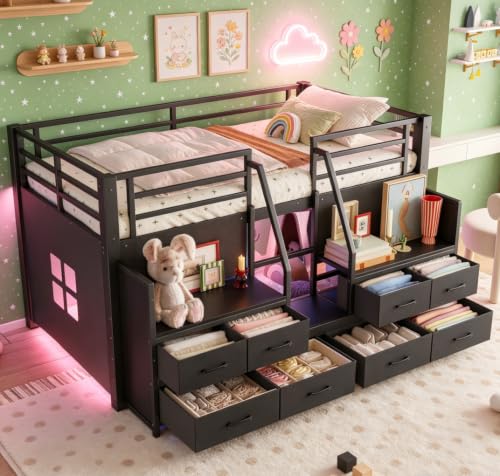
[Twin low Loft bed with ladder]This twin loft bed elevates the sleeping area, creating ample under-bed space that can serve as a play area for children and pets. It features integrated storage ladder and fabric drawers
Where to Find Extra-Tall Loft Beds for High Ceilings
Finding the right extra-tall loft bed can feel like searching for a special tool in a crowded hardware store. Here’s where you look. Start with major retailers like Wayfair, where you search “extra tall” to find listings from various brands; some even offer adjustable designs for precise fitting. Check specialists such as AdultBunkBeds.com for heavy-duty options, or MaxandLily.com for solid wood high lofts. For truly elevated ceilings, investigate European suppliers like Cinius, known for their “Rising” loft bed model engineered for high clearance. These suppliers often excel in maximizing vertical space. Your search focuses on vendors prioritizing high elevation, sturdiness for adults, and smart vertical use. This narrows your field effectively. Next, you’ll confirm precise measurements.

【18inch High Safety Assurance】The heavy duty loft bed boasted a reinforced square steel tube frame. This full size loft bed frame comes equipped with a 18-inch tall full-length safety guardrail, non-slip rubber stair pads, and wall-anchoring hardware—providing all-around protection for the top bunk against falls and tipping. No box spring is needed.
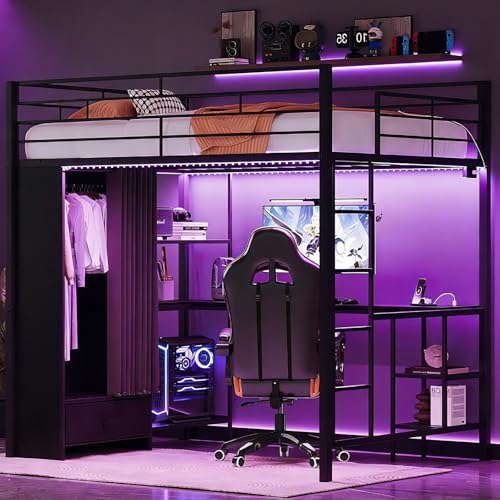
All-in-One Loft Bed with Built-In Power – Combines an elevated bed, spacious computer desk, open shelves, and wardrobe into one space-saving design. Equipped with 2 built-in power outlets (one on the guardrail and one on the desk) for easy charging of laptops, phones, and gaming devices.

【Smart LED Lights, Charging Station & Storage】– Elevate your room with built-in LED light strips, perfect for immersive gaming or a relaxing ambiance. The integrated power strip features AC outlets and USB ports to keep your devices fully charged, while the thoughtful bedside storage pocket keeps your phone, glasses, and remotes neatly within reach
Final Checklist: Measuring for Your Perfect Loft Bed Height
Now, define your under-bed goal: is it for a desk needing 40+ inches, or just storage? This decision dictates your required clearance and is a core installation consideration. Sketch a floor plan noting all obstacles like doors and windows.
Your final verification? Confirm your total—frame height, mattress, and 30+ inches of headroom—fits beneath your ceiling. This checklist turns anxiety into a plan that actually works.