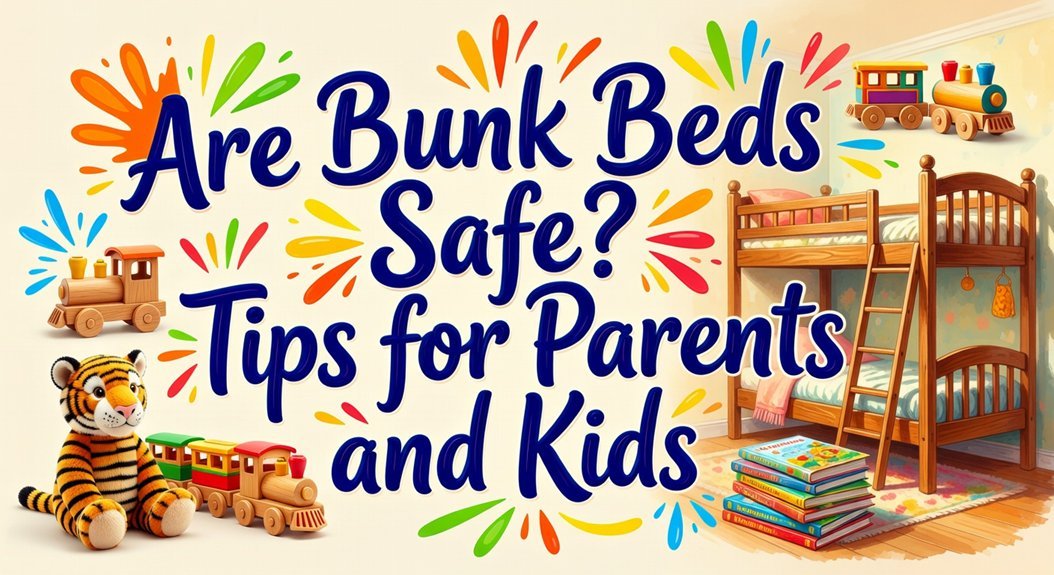
Are Bunk Beds Safe? Tips for Parents and Kids
You’re smart to wonder if bunk beds are safe. Obviously, there are risks — about 36,000 kids get ER-treated yearly, often from falls. Here’s the thing: they can be safe with strict rules. Guardrails on both sides and banning kids under six from the top bunk are non-negotiable. Your next step is checking for solid construction and proper setup, which makes all the difference. Let’s break down exactly how to turn that bunk into a secure fortress.
What Are the Real Risks of Bunk Beds?
So you’re wondering just how risky bunk beds actually are? The numbers are pretty stark. Around 36,000 kids and teens get treated in ERs yearly, mostly from top bunk falls causing head injuries, cuts, or fractures. Obviously, falls are the main danger, worsened by the extra height. But the real hazards aren’t always obvious. Structural failure is a big concern. A wobbly frame, broken slats, or an unsecured mattress support can easily lead to a collapse or a fall. Common causes like exceeding weight limits or worn hardware can silently compromise a bed’s integrity. And age suitability is critical. Half of all injuries happen to children under six, who simply lack the coordination needed for a top bunk or even safe ladder climbing. That’s your core risk breakdown. Most safety experts recommend waiting until a child is at least six years old. Parents should also prioritize sturdy construction and regular inspections to catch potential problems early. Next, you’ll need to know how to mitigate them.
Essential Safety Rules Every Family Must Follow
Now, for the top bunk: guardrails are mandatory on both sides. They must extend five inches above the mattress. Any gaps should be smaller than 3.5 inches to prevent slips or worse. Check that the height of the top mattress from the floor, typically sixty to seventy inches for a twin-over-twin bunk, still leaves safe clearance from your ceiling. Obviously, kids under six shouldn’t use the top bunk.
Finally, place the bed carefully. Keep it away from ceiling fans and windows with blinds. Secure the ladder firmly to the frame; it shouldn’t wiggle, so prioritize models with a sturdy ladder design according to expert reviews. You’ll also want to inspect everything regularly for loose screws or cracks. Your main job is creating a stable, monitored environment. Ensure the bunk bed complies with current safety standards like ASTM or CPSC guidelines. So, what’s your next step? You’ll need to learn how to spot these features when you’re ready to buy.

【Space-Saving & Low-Height Design】- This twin-over-twin bunk bed is designed for compact spaces, standing at just 60.2 inches tall, making it ideal for small bedrooms, dorms, or guest rooms. The low-profile design ensures safety for younger kids, reducing the risk of falls while maximizing floor space for play or storage. Whether you have low ceilings or limited room, this bunk bed fits seamlessly without feeling cramped. The lower bunk sits close to the floor, making it easy for kids to climb in and out safely.

【STURDY METAL FRAME】This twin bunk beds made of strong steel construction with black powder coat finish; Weight limit of Lower bunk: 400 lb, Weight limit of Upper bunk: 400 lb; Optional wall-mounted bracket included to increase the stability of bed

【Upgraded Safety and Convenience】 14.2" high guardrails and a sturdy ladder ensure secure climbing. Designed with hanging hooks and storage pockets to keep the space tidy — bunk bed twin over twin for dorms, cabins, and vacation homes
What to Look for When Buying a Safe Bunk Bed
When you’re choosing a bunk bed, all those safety rules can feel overwhelming—but knowing what to look for on the frame itself cuts through the noise.
How do I know a bed’s even safe to buy?
You’ll need to see certification labels. Look for tags from groups like ASTM or CPSC. Obviously, you’re verifying the bed meets modern safety standards. Never buy one without this clear proof.
What makes a frame solid enough?
Check its posted weight capacity for each bunk. Prioritize solid wood or metal construction, as these are the common materials outlined for durability. Confirm the guardrails are permanent and tall—over five inches above the mattress top. A typical limit for a standard frame is 200 lb–250 lb per sleeper. Also, inspect the ladder design for secure attachment and slip-resistant steps.
Your goal is a sturdy, certified bed. Now, what about the one you already own?

TESTED & TRUSTED BABY SAFETY BRAND: Regalo bed rails have been trusted by parents for over 30 years. Certified by the Baby Safety Alliance, providing dependable protection for toddlers and young children during sleep.

EXTRA LONG BED RAIL FOR TODDLERS: 54-inch long bed rail guard with a 20-inch tall safety barrier provides extended protection for restless sleepers and helps prevent nighttime falls.

Ideal 5-Inch Profile for Bunk Beds & Daybeds: This medium firm mattress provides the perfect low-profile support for raised frames. It offers a balanced feel, contouring to your body while preventing sagging, ensuring compatibility and safety for bunk beds, trundles, and daybeds.
How to Perform a Safety Inspection on an Existing Bed
You’re wondering how to check the bunk bed you already have, which is a smart question—it’s not just about buying safely, but keeping it safe. Start weekly by tightening all hardware and checking for wobbling. Examine joints for cracks and run your hand over surfaces for splinters; this is old wood identification, which reveals hidden weaknesses. For a more thorough assessment, you could consider a professional testing service that specializes in evaluating structural integrity and safety compliance.
Now, measure carefully. Guardrails must extend at least five inches above the mattress. Use the back of a ruler to check for gaps under 0.22 inches where a child could catch clothing. Also, verify the mattress fits snugly with no dangerous gaps. This is especially important after a recent assembly, so ensure all upper and lower mattress supports are properly secured. When dismantling for a move or deep clean, it’s crucial to systematically label all hardware for a safe and straightforward reassembly.
Your monthly check should include searching for manufacturer recalls online. Finally, test every guardrail with firm pressure. A safe bed feels completely solid. To ensure the bed is securely attached to the wall as intended, you should also periodically inspect the wall anchoring hardware for stability.

Products Hardware Kit: This set includes M6 crib screws in 4 lengths (20mm, 40mm, 60mm, 80mm) along with matching barrel nuts and wrenches for assembling cribs, bunk beds, headboards, and other furniture.

Exquisite Material: The hardware replacement kit is made of high-quality carbon steel, color zinc, which has high hardness, corrosion resistance, rust resistance, not easy to be damaged or broken, strong and durable.

Crib Screws Hardware Replacement Kit(with Barrel Nuts/Dowel Pins/Hex Wrenches);Type: Socket Head Screws
Setting Up a Safe Room for Bunk Beds
Okay, so you’ve got your safe bunk bed checked—what about the room around it?
Positioning Is Key
Place the bed against a wall, but avoid windows and ceiling fixtures. You’ll need clear pathway clearance around the entire bed for safe climbing and play. Keep toys and bags off the floor here. Remember to check the bed manufacturer’s specifications for any required clearances around the frame.
Don’t Skimp on Lighting
Obviously, you need good room lighting. Install a nightlight to illuminate the ladder’s steps and that clear path to the door. Wall-mounted lamps are best to avoid dangling cords.
Lock Down the Layout
Secure the frame to the wall with L-brackets for stability. Finally, respect the ceiling height—leave ample space so no one sits up and bumps their head, and measure the space between the mattress and floor to ensure there is adequate clearance for sitting if the lower bunk is used for seating or a desk. For a loft or bunk bed, selecting the right sleeping platform height between 4 ft and 6 ft is crucial for safety and function. Your room is now prepped. Next, you’ll want to establish some simple ground rules for use.