
How to Fold Bed Sheet Corners for Bunk and Murphy Beds
You’re tackling the tricky corners on bunk and Murphy beds, and you’ve hit on the perfect solution: hospital corners. This neat tuck creates a tight, 45-degree triangle that locks your flat sheet securely under the mattress, making it famously hard to kick loose. For a truly snug fit that lasts, you’ll need to master the classic technique and perhaps explore some clever tools. Let’s get into those essential steps next.
What Are Hospital Corners and Why They Work on Bunk Beds
Since you’re researching how to keep bunk bed sheets looking tidy and staying put, hospital corners are the technique you want. It’s a folding method that tucks sheets tightly under the mattress corner. This creates sharp edges and a smooth surface.
Its name hints at its hospital origins and military applications. These places needed beds to stay perfectly neat under constant use. Now, you can use that same institutional efficiency at home. The three main steps create a neat and crisp fold that is very easy to execute. A similar space-saving principle can be applied to your linen closet by using a pillowcase fold technique for flat sheets.
Here’s why it’s perfect for bunks. The secure tuck actively resists sheets from pulling loose, which is vital on an elevated mattress. Even with tossing in a confined space, you’ll get a wrinkle-free, secure fit. It’s a tidy system that genuinely works where standard tucking fails. This technique also helps when folding sheets for compact storage spaces like those in Murphy beds. For the neatest results, use this method in combination with step-by-step instructions for folding fitted and flat sheets.
Master this, and your bunk bed will look professionally made.
Tools You Need for Tucking Bunk Bed Sheets Tight
Achieving those crisp hospital corners on bunk beds doesn’t have to be a wrestling match. You need tools that make tucking easier, especially for elevated mattresses. Sheet tucker paddles have a wide-angle design that slides under to lift the mattress, letting you neatly insert the sheet. The paddle-shaped tool operates between the mattress and foundation to work around the entire edge. For a heavy mattress, you might try a flat lifter bar. Now, sometimes deep tucking isn’t practical for the top bunk. That’s where lightweight alternatives like sheet clips or elastic straps shine—they anchor the edges securely to the frame, and this is particularly useful for ensuring sheets don’t interfere with the sturdy guardrails. A secure fit is also essential for maintaining structural integrity, especially when considering adult bunk bed safety. Finally, you’ve got cost effective tools like adhesive grippers or safety pins. These simple solutions hold a flat sheet tight without any special equipment, giving you reliable results with minimal effort. When securing sheets on a Murphy bed, always ensure the anchoring system does not obstruct the bed’s moving mechanisms or safety features.
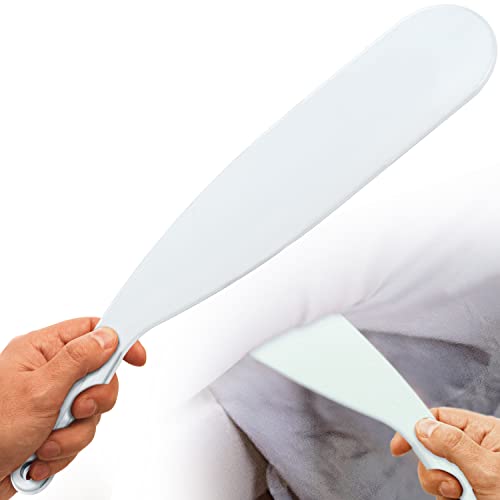
14.5 INCHES — LONGER & STRONGER THAN THE COMPETITION — Most sheet tucker tools are only 12 inches long. Berkland's 14.5-inch design reaches deeper under the mattress to tuck sheets tighter, and the reinforced construction won't flex or snap under a heavy mattress. More reach means less lifting and less strain on your back.
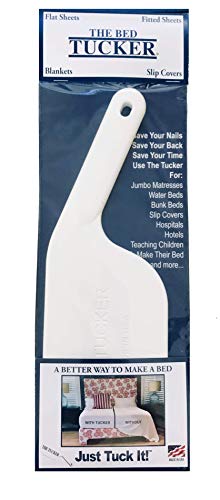

✅【Making Bed with Ease】This sheet tucking tool helps simplify bed making. Use the bedsheet paddle to tuck your sheets tighter without having to elevate the heavy mattress, resulting in neat and clean sheets.
Step-by-Step: Making Classic Hospital Corners on a Flat Sheet
Although bunk and Murphy beds present a unique challenge, crafting hospital corners isn’t as intimidating as you might think.
Start at the mattress foot, tucking that excess fabric underneath. Now lift the side fabric up to form a crisp 45-degree triangle on the mattress. Your material selection matters here; crisp cotton holds this shape best. For bunk beds, completing this task is easier after a preliminary bed dismantling to fully access the mattress, especially if you’ve previously separated the bunk bed frames for more room to work.
Hold that triangle firm. Tuck all the hanging side fabric underneath the mattress. Let go, and the triangular flap falls neatly. Finally, tuck any remaining corner fabric. That’s your classic method. The common goal of this technique, like other methods, is to create a smooth and tight result. For beds against a wall, like a Murphy bed, ensure you have proper wall anchoring to safely work around the mattress.
Obviously, you have fold alternatives for trickier spaces, but this technique is your foundational skill. Master this on a flat surface first, and you’ll create tight, professional corners every time.

Premium 100% Cotton Percale: Crafted from 100% cotton in percale weave, our fitted sheets offer exceptional strength and durability for long-lasting use. Experience the ideal balance of softness and crispness, providing a fresh, cool feel

Classic Bed Sheets are designed to provide comfort and durability for patients in a medical setting. Hospital Bed Sheets are a reliable and comfortable option for hospital beds, providing patients with a relaxing and soothing environment during their recovery process. PACKAGING: Our white fitted hospital bed sheet is coming 1 piece in a pack.

Pure Cotton Sheet Set: Introducing Casa Platino's 100% Cotton Sheets Set - made using high-quality cotton, in an OEKO-TEX Certified factory. All our cotton products are tested against harmful chemicals & substances, and are made following stringent guidelines & processes to ensure that we can offer the best quality products to you.
Box Corners vs. Hospital Corners for Thick Bunk Bedding
When you’re dealing with thick bunk bedding, it’s normal to wonder which corner technique actually holds.
Your fabric weight comparison is key. Structured fabrics like percale excel with hospital corners; they create that crisp, locking crease. Softer, thick materials often suit box corners better. Their straight, perpendicular folds manage bulk without the tricky 45-degree angle. Both techniques, however, share the same essential starting point: a tight foot tuck.
Now, security. Hospital corners are famously difficult to kick off. They’re designed for it. Box corners also resist shifting through straight-line tension. A snug fit is especially critical for upper bunk safety to prevent the mattress from shifting. For longevity, consider stitch reinforcement techniques in your sheets. Tight seams at the corners handle the tugging from either fold. This secure bedding helps create a safe sleeping environment free from tripping or entrapment hazards.
Both work, but your fabric dictates the winner. Test each with your specific bedding. Which felt more secure and looked tidier? Proper assembly and regular maintenance of the bed frame itself are prerequisites to ensure the mattress and bedding remain securely in place, preventing a bunk bed collapse.

Hospital Bed Fitted Sheets with Elastic All the Way Around: Sized 36 x 84 with a 12-inch pocket, the stretchy knit hugs the mattress for a snug, perfect fit that holds when the head or foot is raised; ideal for adjustable home care beds

Complete 3-Piece Bedding Set for Immediate Use: This set provides a full solution with 1x fitted sheet 36" x 80" +12", 1x flat sheet 60" x 105", and 1x pillowcase20" x 30". Perfect for those seeking convenient hospital bed sheets for home use, it offers everything needed to dress a care bed comfortably and neatly right out of the package.

Marvelous Fit with a Deep Pocket: Biloban hospital bed sheets measuring 36 by 84 inches with a 14-inch deep pocket perfectly fit for most home/hospital beds and will surely create a cozy sleeping and relaxing atmosphere.
Adapting Hospital Corners for Hard-to-Reach Bunk Bed Corners
Start by pre-tucking your flat sheet along the mattress length. This reduces your work in the tight corners. Now, use a modified 45-degree fold. Here’s the thing: in a bunk’s tight corner, you’ll often create a shallower 30 to 40-degree triangle. Kneel or crouch for leverage, working from the foot of the bed inward for better angles, a practice that also supports maximizing ergonomics in elevated sleeping areas. You might only use one hand, so prioritize mastering the easier corners first. Remember to account for the mattress thickness under the fitted sheet when judging how much fabric to tuck. For a bunk bed, always verify that the sleeping platform height allows you to work safely and comfortably. These adaptations make the impossible corners totally manageable. Next, you’ll want to guarantee those tight tucks stay secure.
How to Tuck Sheets Under a Heavy or Deep Mattress
Tucking a sheet under a heavy or deep mattress can feel like a workout, but you’ve got smarter options than brute force. Forget heaving the whole thing. Instead, try clever sheet flipping methods. You’ll lift just one corner at the foot of the bed, tuck the sheet in small sections, and work your way around sequentially. This minimizes your effort drastically. A permanent solution like a giant headband design that wraps the mattress sides can also eliminate the need for any future lifting, especially if your mattress sits on a solid foundation that adds height. Just as you would assess the cause of bed movement like uneven flooring, check if your mattress shift is due to a lack of friction between the sheet and mattress surface. This is particularly important for heavy adult mattresses on full-over-full bunk beds that require secure bedding.
Now, for truly stubborn mattresses, use simple mattress shim techniques. Slide a long-handled tool, like a bed-making stick, along the edge. It scoops the sheet under without any lifting on your part. That’s your go-to for deep, inaccessible sides. Obviously, you can also install specialized straps or a zippered sheet system for a permanent, no-lift solution. Your clear takeaway? Target small sections or use the right tool to avoid the strain.
Securing Sheets on Adjustable or Trundle Bunk Beds
Your main tools are deep-pocket fitted sheets, sheet fasteners, and specialized suspenders. You need sheets with pockets 8 to 18 inches deep, which prevent corners from popping off during adjustments. For snugness measurements, check that elastic bands are about 1.5 inches wide. Now, sheet fasteners or straps criss-cross underneath, locking everything down. Here’s the thing: fabric types matter because stretchy, quality material grips better. Obviously, sheet suspenders attach under the mattress, creating a secure anchor system. The techniques used for trundle bunks are also helpful for securing sheets on convertible designs highlighted in top bunk bed reviews. This is particularly important for the double-size lower bunk often featured in family-oriented models for its versatility. Your final takeaway: proper tools and installation keep sheets taut on any adjustable bunk bed. Next, you’ll want to contemplate how these systems handle daily use and movement.
Fixing Common Bunk Bed Sheet Problems: Looseness and Wrinkles
Since you’re tackling bunk beds, you’re probably wrestling with sheets that slip loose overnight or wake you up wrinkled.
Why do my sheets keep coming untucked?
A poor fitted fastening causes this. You’ll start your friction strategies by ensuring that fitted sheet hangs evenly on all sides. Pull it taut before securing each corner under the mattress. That initial tension is everything.
How do I get rid of all these wrinkles?
Wrinkles come from slack fabric. Align your flat sheet precisely with the mattress edges before you begin tucking. When you form that 45-degree triangle, keep the sheet pulled tight as you tuck the excess under.
Your takeaway: Perfect tension during tucking solves both looseness and wrinkles. Now, let’s lock that technique in for a smooth week ahead.

UNIQUE, PATENTED INNER CIRCLE FOR MAXIMUM STRENGTH: unlike other bed sheet holders with a triangle shape, our unique patented design features an inner circle, making these bed sheet holders more durable, strong, and resistant to snapping or breaking; innately durable design to last for years

END THE FRUSTRATION, FOR GOOD: Never wake up on a bare mattress or struggle with a bunched-up sheet again. Our clips securely anchor all four corners of your fitted sheet and mattress pad, keeping them perfectly taut and in place, no matter how much you toss and turn.

SLEEP IN COMFORT - Exclusively designed, this versatile bed sheet gripper works with all types of bedding and requires no heavy lifting. Our Bed sheet fasteners for keeping sheets tight.durable,easy to use. just attach heavy-duty clips and make the bed as usual, No more messy, wrinkled sheets; with our bed sheet clips, you'll have smooth and secure sheets to help you sleep in comfort.
Keeping Your Bunk Bed Sheets Neat Between Changes
Keeping your bunk bed sheets looking fresh doesn’t have to be a daily battle. You’ll focus on daily habits and smart setup. Start by straightening sheets daily without fully stripping the bed. A firm morning tuck preserves your work. Now, consider pillow anchoring. Designate a spot at the foot of the bed for pillows. This prevents scattering and gives a neat, stacked look. For sheet suspension, consistently tuck edges firmly to create a secure hold that resists overnight shifting. Clear the floor and surrounding area daily. This visual tidiness makes the whole bed appear neater. Your takeaway: Small, consistent actions beat deep cleaning every day. Ready to tackle more stubborn shifting?
Advanced Solutions: Using Sheet Straps and Fasteners
When you’re researching how to stop those fitted sheets from constantly popping off, especially on tricky bunk or Murphy beds, you’ve hit on the right solution: sheet straps and fasteners.
Their adjustable mechanisms are key. You can customize the length for different mattress depths and tighten the tension with clip systems. This maintains a smooth, wrinkle-free surface. For bunk beds, a three-corner placement often works better due to space constraints. Clip systems are tight to hold the sheet securely in place.
Now, check compatibility considerations. Look for universal systems that function across all your bed frames without needing to move the mattress. They should work with any sheet fabric weight.
Your clear takeaway: these tools offer a durable, professional-looking fix. Next, decide which attachment method—like suspenders or underbed tucking—best suits your specific bed frame.

Triangle Design Keeps Sheets Secure All Night – RayTour fitted sheet straps use a triangle corner locking system to keep sheets firmly in place and prevent slipping, shifting, or bunching. Fits Twin, Full, Queen, and King mattresses.
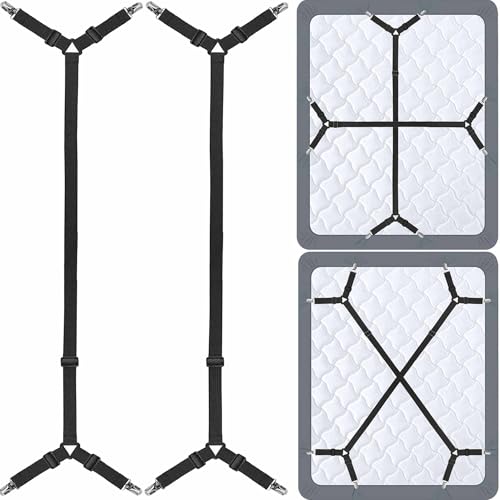
1, BED SHEET STRAPS SUSPENDERS : Multi-functional Adjustable length from 96cm/38inch –171cm/67.3inch, Nickel Plated Clamps with Fabric Protector.

Strong Gripper Keeps Sheets in Place: These bed sheet clips feature reinforced metal clips with soft latex rubber padding. They grip sheets firmly all night without damaging the fabric, and snap open and closed effortlessly. Roll and toss freely in bed while sheets stay secured—no slipping, bunching or wrinkling—to boost sleep comfort, and save you from tedious morning bedding tidying