

Creative Ways to Decorate a Loft Bed
So you’re staring at that loft bed frame and wondering how to make it a true sanctuary, right? You’ve got a fantastic opportunity to blend safety, style, and smart space use. Start by adding sheer curtains for soft privacy and layer your lighting—ambient, task, and accent lights are key. Define a cozy lounge zone underneath with layered rugs and use the structure itself for canopies or railings that double as art. There’s a clever way to tackle every corner, and I’ll show you how it all connects.
Use Curtains for Privacy and Visual Separation in Your Loft
You’re wondering how curtains actually work in a loft, right? They create instant privacy and define your space without building walls.
Ceiling tracks are your best friend here. They let you mount long, sliding panels from your loft’s edge down to the floor, carving out a private bedroom. For a softer look, hang sheer fabrics. They filter light beautifully and add subtle separation while keeping the airy loft feel.
Here’s the thing: you can layer them. Start with a sheer layer, then add a blackout curtain behind it for sleeping, paying close attention to the material durability for longevity. This gives you flexibility, and for children’s spaces, integrating curtains can be part of creating an engaging play zone underneath. Your main takeaway? Curtains offer the most adaptable visual barrier you can install. They let you open up the space whenever you want. Always secure your curtains properly to prevent any potential tripping hazards.

Self-adhesive curtain track: The design combined with strong adhesive backing is an innovative upgraded version of our curtain track, providing a simple solution for curtain installation. No drill bits or screws are needed. It can be installed freely and easily - just peel off the red adhesive tape on the back of the track and stick it onto a clean surface.

[Package Contains]:The ceiling curtain track system includes 1x curtain track 9.8ft(3m), 26x track rollers,9x ceiling brackets, 2x end covers, 26x iron hooks, 9x drywall anchors, 9x screws.(Note: Clips are NOT included)
Enhance Loft Safety With Stylish, Functional Railings
Now, moving from curtains to something more permanent, you’re probably wondering how to make your loft bed safer without ruining its style. Safety isn’t optional—roughly 71,000 bed-related injuries occur yearly. Obviously, you need a reliable railing to prevent falls, and these railings should meet strict sturdy construction standards to ensure they can withstand regular use.
Here’s the thing with Industrial Materials: black pipe or reclaimed wood railings add a durable, stylish edge. They integrate seamlessly with modern or rustic frames, boosting safety dramatically, and their metal construction often aligns with the high load capacity required for lofted bed safety systems. When selecting a new loft bed, always check for integrated safety railings as a key feature highlighted in buying guides.
Alternatively, consider Transparent Barriers like glass panels. These maximize light and maintain an open, airy feel in tight spaces, which is a huge design win. Whether you choose bold industrial pipes or sleek glass, your railing can be a core design feature that genuinely protects you.

Safety you can Trust: One of the only bed rails on the market that has passed the ASTM F3186-17 Safety Standard for Adult Portable Bed Rails; only use bedrails that have been tested and certified safe by ASTM to prevent risk of falls and entrapment

EXTRA LONG BED RAIL FOR TODDLERS: 54-inch long bed rail guard with a 20-inch tall safety barrier provides extended protection for restless sleepers and helps prevent nighttime falls.

BOAT LIFELINE SAFETY NETTING - Keep kids, pets, crew, and equipment safe and secure on deck.
Choose a Staircase That Doubles as a Design Feature
Now, for decoration, integrate printed art or apply colors directly to your painted panels. Staggered designs let you mix textures across each step for huge visual impact. To ensure structural integrity for your decorative project, begin by selecting properly measured side rails and rungs from quality lumber. Obviously, you could also buy a themed, storage-integrated staircase from a custom maker. When selecting a pre-made model, prioritize options with sturdy construction and smooth-sliding drawers that meet safety standards. This ensures the design aesthetics you love are matched by lasting quality and safety. Your choice balances safety, space, and art. Decide if you’re crafting a feature or installing a solved one.

📊Maximum Load Capacity:250lb 💪Heavy duty undermount drawer slides are crafted from 2mm thick high-density, high-strength cold-rolled steel. 🏗️Maintains drawer stability and safety even when loaded with up to 250lb, passing 800,000 full-load opening/closing tests without damage. ⚡The slides have a service life of 30 years! ⏳

【Multifunctional Staircase with 6 Storage Drawers】This twin over twin bunk bed features a spacious staircase instead of a traditional ladder, providing safe and sturdy climbing for your family. The staircase includes 4 drawers of varying sizes built into the steps, plus 2 additional under-bed drawers—offering a total of 6 convenient storage spaces for clothes, toys, bedding, and daily essentials. This super organized design keeps your room clutter-free while maximizing functionality.
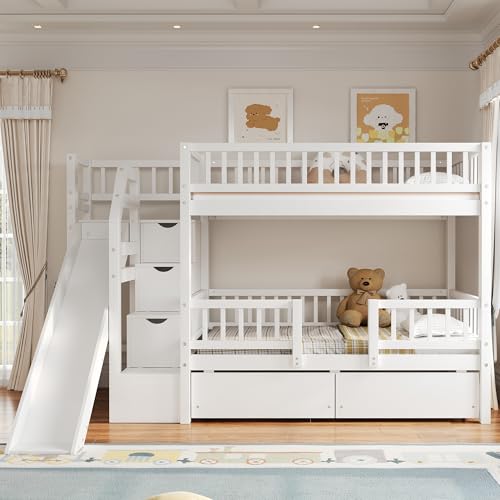
【Maximized Space】The twin over twin bunk bed can save plenty of room for you to place other furniture in your bedroom. The two drawers and storage staircase provide ample storage for your everyday items.
Add Softness to Your Loft With Canopies and Upholstered Panels
Softening a loft bed’s edges might seem tricky—after all, it’s mostly wood and metal. Here’s your solution.
Drape sheer canopies from the frame. They instantly add a soft, airy layer. For a sleek modern look, try an arched canopy. It frames your bed beautifully. Before hanging heavy fabrics, ensure you have adequate ceiling height to maintain comfortable clearance.
Now, tackle those hard surfaces directly. Add upholstered sides by securing padded panels to the bed’s wooden rails. This creates a plush, cohesive feel right where you touch it, though it’s important to remember that sturdy construction is a key factor for all loft bed modifications.
Combine both for maximum coziness. A blush canopy lightens the mood, while upholstered panels offer a tactile softness. You’ve transformed the structure’s feel without a major remodel. Always confirm that your chosen materials and attachments respect the bed frame’s specified weight limit for safety.
Ready to define the space below your new cozy perch?

SUPERIOR BLACKOUT This bottom bunk bed curtain features thick lined fabric with a built-in shading layer,blocking overhead lights,early morning sun,and hallway glare—ideal for daytime naps,early bedtimes,and shift work sleep.As effective bunk bed blackout curtains,it creates a truly dark,restful sanctuary.

🌛Size: Each panels 1.15mx2m/45.2x78.7inch, recommend for bottom bunk bed width 1m or less & length 2m or less. can fully cover front, two sides.

[SIZE NOTE]:Bunk bed curtains size is 78.7*45.2 inches/200*120 cm (L*W). Suitable for 2*1m/78.7*39.5 inches or smaller single/twin bunk beds. Can cover both sides and front. Suggested loft height is 45-50 inches if used as underbed curtains
Design a Cozy Hangout Zone Under Your Loft Bed
Since you’re wondering how to actually use that space under your loft bed, here’s your starting point. You transform it by defining a dedicated lounge area. Start with your floor. Layer multiple rugs to visually separate this hangout zone from the rest of your room. Now, add seating that invites you to stay awhile. Tuck in a couple of comfy armchairs for solo reading. Line one wall with cozy benches topped with cushions for friends. Drape throw blankets over everything for instant warmth. This creates a versatile space-saving solution ideal for small apartments or shared rooms. Maximize functionality by ensuring your seating choices adhere to the combined weight capacity of the entire structure, and always verify the structure’s weight limits during your initial planning. Finally, set the mood with lighting. String lights or a small lamp create a defined, relaxing ambiance without harsh overhead glare. You’ve just built a private retreat.
Get Creative With Under-Bed Storage Solutions
You’ve got that cozy hangout zone sorted, but what about all the stuff that needs a home? Get creative by mixing storage styles. Repurpose an old dresser or vintage trunks for a custom look. Use clear plastic bins for visibility or woven baskets to add texture. Now, integrate smart storage systems. Bed risers add 3–6 inches of height for taller bins. Build DIY drawers on slides or use a rolling cart. When selecting a loft bed for a small room, the footprint is a key factor to consider for maximizing floor space. For a custom solution, you can build an underbed drawer from a box and plywood drawer with pocket-hole screws for tidy storage. Here’s the thing: vacuum-seal bags compress bulky bedding, freeing up space for other items. When evaluating furniture, always prioritize safety rail design and weight capacity for a secure setup. When choosing a pre-built model, a detailed product comparison based on material and price is essential. Combine these solutions to create a layered, organized zone. You’ll maximize every inch. With your storage solved, you can finally focus on making the entire space feel uniquely yours.
Personalize Your Loft Bedroom With a Themed Aesthetic
Figuring out a theme can feel tricky when your space already has such strong architectural character. Here’s the thing: your loft’s features, like exposed beams and high ceilings, become part of the theme. You can build your aesthetic around them.
Start by maximizing natural light as your foundation. Keep windows bare or use sheer curtains to welcome that sunlight in. Now, try creating themed zones within the open layout. Anchor a cozy reading nook with a caramel leather chair and a chunky rug. Define a sleek lounge area with a bold, abstract art piece and a textured glass table. Elevate this area by installing a large statement piece to create a powerful visual anchor. For even more personality, consider a DIY headboard project to define your sleeping area with custom style.
Your clear architectural lines provide the perfect canvas. Layer in your chosen textures and colors fearlessly for a space that’s uniquely yours.
Layer Lighting in Your Loft for Ambiance and Function
All right, so you’re wondering how to make a loft feel cozy and functional without ending up with either a cave or a sterile lab. Start by layering three light types.
First, install ambient fixtures for overall brightness. Your fixture positioning is key; try recessed lights or a central pendant.
Then add task lighting exactly where you need it. Think under-bed LEDs for reading or an adjustable lamp for a desk.
Finally, use accent lights like fairy lights for mood. This is where lighting automation shines, letting you dim lights or change color with a tap.
Begin with just two layers, then add the third. This balance creates a space that works for any activity, day or night.
Incorporate Plants and Art to Add Character
Now, after you’ve set up your layered lighting, it’s probably feeling more functional but still a bit bare. Here’s how plants and wall art add the character you’re missing.
Start with plant shelves above your bed. They’re perfect for trailing plants. You won’t waste floor space. Using Command strip shelves that avoid wall damage is ideal for rentals and can hold lighter decorative items. Combine this with a large piece of wall art for a layered, personal anchor. In an empty corner, group plants of varying heights with a comfy chair to create a reading nook. Hang plants from the ceiling in decorative planters. This immediately fills vertical space. Put a snake plant or lavender on a bedside surface for instant calm. Each living element softens the space. Use abstract prints or boho tapestries alongside pots to frame your loft. The mix makes your bed’s level uniquely inviting.
Your next choice is balancing these decorative pieces with furniture that works for you.
Select Flexible Furniture to Maximize Your Loft Layout
Since you’re likely wondering how to furnish underneath a loft bed without feeling cramped, selecting flexible pieces is key—they’ll let you adapt the space as your needs change. Start with modular sofas for multipurpose seating; they reconfigure easily for guests or to free up floor space. Then, attach fold-down desks to your walls, tucking them away after use. For storage, install smooth-sliding wardrobes or pull-out drawers beneath the bed frame. This creates the foundation for adaptable layouts.
These stackable, multi-functional units help you transform the area from a home office to a lounge in minutes. Use low-rise lofts for sofas or higher ones for wardrobes. Your biggest win? A room that evolves with you without a permanent footprint. Now, where will you start your layout?

Premium Corduroy Cloud Comfort – Upholstered in high-quality corduroy fabric with soft, breathable texture, this 125-inch U-shaped sectional combines 32D high-density foam cushions and individually wrapped springs for optimal comfort and support. Perfect for long movie nights, gaming sessions, or family relaxation, delivering the ideal balance of softness and structured support for your home.

【ALL-FOAM BONELESS DESIGN】Experience ultimate peace of mind with our 112.2" modular sectional sofa. Built entirely from high-density foam with no springs or hard frames, it provides quiet, uniform support and cloud comfort that's safe for kids and pets—no more bumped knees or squeaky seats.

Versatile 4-in-1 Space Solution | This compact convertible couch bed effortlessly transforms into 4 modes: Sofa, Lounger, Chaise, and Guest Bed. It’s the ultimate modular couch lifestyle hack for small apartments, dorms, and home offices, providing an expansive sleeper sofa experience without sacrificing valuable square footage. It’s the futon sofa bed that seamlessly shifts to your needs.