
Murphy Bed History: From Space‑Saving Invention to Today’s Trend
You’ve found a piece of furniture whose history is as clever as its design. The Murphy bed was invented around 1900, inspired by a courtship where social rules prevented a lady from seeing a bedroom. Its revolutionary hinge system let you transform a tiny apartment into a stylish parlor instantly. After declining mid-century, it’s back as a perfect solution for modern flexible spaces. See how it became a Jazz Age status symbol and why it matters again now.
Who Invented the Murphy Bed and Why?
Now, his “why” involves a romantic courtship. He wanted to entertain an opera singer, but strict 1900s manners forbade her from entering a bedroom. So, he needed to hide his bed entirely. This personal quest for concealment and spatial transformation connects to a broader, more mysterious tradition of unique wall‑mounted beds, drawing from an earlier history of simple wooden frames that could be collapsed for storage. His pivot-and-counterbalance design turned his private room into a public parlor. The popularity of his invention later grew as a solution for maximizing limited living space in urban apartments.
He patented his “Disappearing Bed” and, yes, he married that singer. His invention solved a very personal space problem first. Next, you’ll see how that clever mechanism changed urban living for everyone.
What Made the Murphy Bed Design So Revolutionary?
What Made the Murphy Bed Design So Revolutionary?
No major renovations were needed. Clever hinges with springs or pistons let you lower and raise it with one hand. It secured firmly upright, eliminating visual clutter. This multifunctional approach maximized square footage, especially in tiny apartments or guest rooms. You gained flexible living without sacrificing comfort, though it’s worth noting that higher upfront costs can be a consideration compared to traditional beds. Today, modern hotels use this same principle to create versatile room layouts that appeal to a wider range of guests, relying on durable hardware like heavy-duty brackets and pistons for daily operation.
The core concept was brilliantly simple: hide the bed to reveal the room. It provided a practical, adaptable solution that felt liberating. This space-saving logic remains its powerful legacy.
Why Was the Murphy Bed a Jazz Age Status Symbol?
You might think a bed that folds into a wall is purely practical, but in the 1920s, owning one became a savvy status symbol, especially in New York.
Now, the Jazz Age prized at-home Jazz Entertainment. A Murphy bed let you transform your cramped one-room flat instantly. Your bedroom vanished, becoming a chic parlor for parties. This clever trick balanced modern fun with Social Propriety, hiding the sleeping area from guests. Fancy hotels and luxury apartment listings touted these beds as premium features. They signaled you’d mastered stylish, efficient city living. The advanced spring or piston counterbalances made this transformation effortless, elevating the furniture from a simple space-saver to a marvel of modern engineering. Their versatile designs, including custom built‑in closets, allowed them to blend seamlessly with any decor. Homeowners could also choose a desk‑integrated unit for a multi‑functional home office that concealed the bed entirely.

【2-in-1 Multifunctional Bed】Murphy cabinet bed easily transforms between a comfortable bed and a sleek cabinet, maximizing space. Ideal for apartments, guest rooms, and multifunctional living areas

[Farmhouse Style]No matter how your style changes, this wood frame has a minimalistic look that allows it to stand alone or match well with any décorlook to it without being overly trendy. This wood bed dresser brings a natural accent to your home.

Farmhouse Style Murphy Bed: Our farmhouse queen size Murphy bed features a unique wood grain finish metal trim and convenient handles. Wall Murphy bed queen size combines farmhouse style and modernity, adding a beautiful, elegant touch to your room, and can fit a bedroom, home office, guest room, and study room.
Why Did Murphy Bed Sales Decline After the 1920s?
How did such a popular innovation fall out of favor? The immediate culprit was the Great Depression hardship. People simply couldn’t afford non-essential furniture. You’d prioritize basic necessities over a clever space-saver, even if you lived in a small apartment.
Now, the deeper, lasting shift came with postwar suburbanization. Families moved from cramped city apartments into spacious single-family homes. Those new houses had dedicated bedrooms, so you no longer needed a bed that vanished into the wall. Its core function became obsolete for the mainstream market. The era’s prosperity and preference for permanent furniture sealed its fate for decades. It would take a modern resurgence of small-space living and the rise of bespoke carpentry workshops in places like Japan to revive the demand for multi-functional furniture like the Murphy bed. The takeaway? Its decline was a perfect storm of economic crisis followed by a fundamental change in how—and where—people lived. This was especially true as the Murphy bed’s superior space‑saving choice was no longer a priority in larger homes.

SAVE SPACE - When not in use, fold up the single bed system to save space. This is a great feature for those with limited storage space.

MULTI-FUNCTIONAL: This universal shelf is ideal as a floating nightstand for bedrooms, a storage TV tray for living rooms, or a small workbench for dorm rooms, kitchens, and small narrow spaces.

Space-saving - Foldable: The bed side tables can be extended to your desired length and position. The foldable design is ideal for smaller spaces, with a thickness of just 3.54 inches when folded.
Why Are Murphy Beds Popular Again Today?
Fundamentally, our need for flexible living spaces has resurrected this clever invention. It’s a direct response to how we live now: densely and dynamically. To ensure long-term functionality and safety, selecting a model with a sturdy mechanism and following proper installation guidelines are crucial. Modern versions are lauded for their smart room solutions, combining sleeping space with integrated storage and design. So, does this versatility fit your own space challenges? By pivoting vertically into a wall‑mounted cabinet, it instantly converts a home office or multipurpose room back into a usable living area.

【Space-saving design】The Murphy queen bed folds down and up against the wall, freeing up floor space in any room. The wall bed is the ideal space-saving piece of furniture for a multi-purpose guest room, home office or home gym.
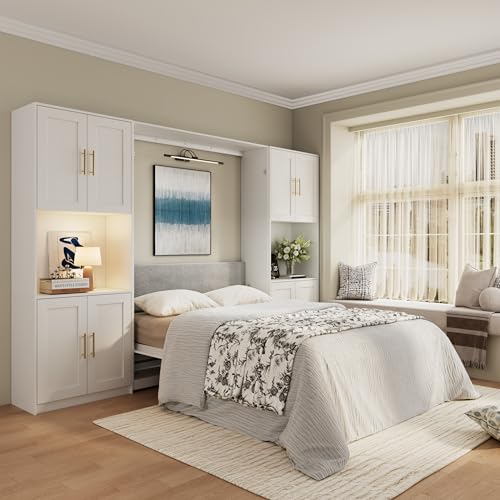
【Space-saving design】: the Murphy queen bed folds down and up against the wall, freeing up floor space in any room. The wall bed is the ideal space-saving piece of furniture for a multi-purpose guest room, home office or home gym.
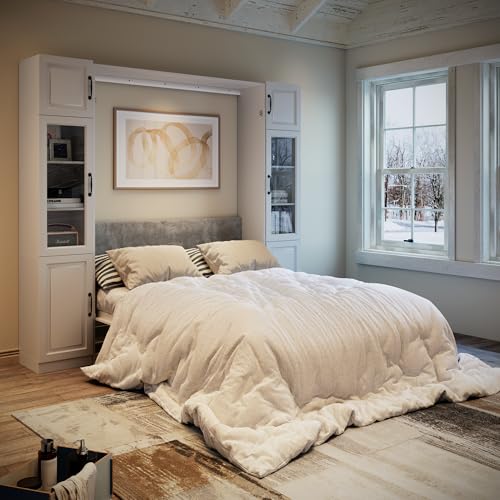
【Space-saving design】The Murphy queen bed folds down and up against the wall, freeing up floor space in any room. The wall bed is the ideal space-saving piece of furniture for a multi-purpose guest room, home office or home gym.