

What to Consider When Buying a Murphy Bed?
You’re asking the right question—a Murphy bed permanently redefines a room, so you’ve got to weigh a few key things. Start by measuring: a queen vertical bed needs a wall at least 9 feet wide and 8-foot ceilings. You must securely anchor it into studs, often needing professional install for safety and warranty. Your mattress should be under 12 inches thick to close properly. Now, let’s break down each detail so you can plan confidently.
How Much Room Do You Really Have for a Murphy Bed?
Before you even measure your wall, you need to know how much floor space a Murphy bed eats up when it’s open. It’s not just the bed’s footprint; you’re planning a whole room. You should also consider standard mattress sizes like queen (60 × 80 in) to understand the exact footprint.
Now, consider your room dimensions. A queen-size vertical bed needs a minimum room of 9 feet wide by 10 feet long. That’s just for the bed to swing down safely. You must also check your ceiling heights. A vertical queen cabinet is about 88 inches tall, so you’ll need standard 8-foot ceilings. The mechanism type can also influence the required clearance and overall footprint of the unit. Proper wall reinforcement is a critical step to safely handle the bed’s weight when installed.
Here’s the takeaway: use painter’s tape to outline the open bed on your floor. You’ll instantly see if your layout works. Ready to look at how the bed actually mounts on your wall?
Vertical vs. Horizontal: Comparing Murphy Bed Mechanisms and Orientations
Your room’s dimensions decide the winner. Use a vertical style if you have high ceilings but a narrow wall. Choose a horizontal orientation for lower ceilings, like in a basement. Consider who’s sleeping, too. Vertical layouts let both people exit easily. Horizontal beds can make one partner climb over the other. Your space dictates the best fold. These mechanisms vary in their space‑saving sleeping solutions as detailed by comprehensive overviews. When planning your installation, a key initial step is assessing your room’s suitability for the required support structure. Modern systems use safety mechanisms like pistons or spring counterbalances for smooth operation.

𝐂𝐎𝐌𝐏𝐋𝐄𝐓𝐄 𝐌𝐔𝐑𝐏𝐇𝐘 𝐁𝐄𝐃 𝐇𝐀𝐑𝐃𝐖𝐀𝐑𝐄 𝐒𝐘𝐒𝐓𝐄𝐌 — WHAT’S IN THE KIT — Includes gas piston lift system (smooth open/close rated for daily use), patented 2-in-1 auto-locking stainless steel pivot plates, heavy-duty square tube folding legs, quick-release mattress retention strap, all mounting hardware and fasteners, plus 3 fully illustrated guidebooks (Cut List Guide, Construction Guide, Assembly Handbook). No separate hardware store runs needed for the mechanical components.
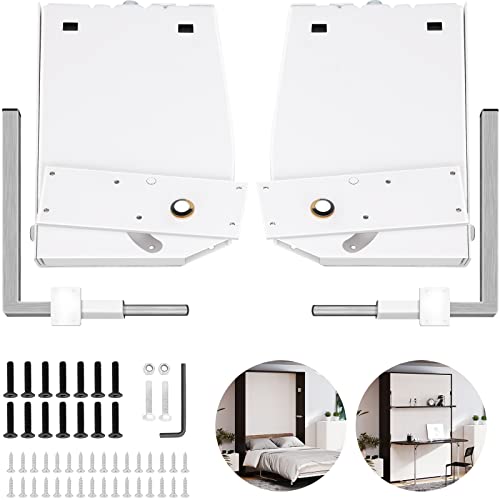
【SUPERIOR REBOUND FORCE】- One person can freely fold out or up the bed. Inside 9 premium springs, high rebound strength to ensure the whole process.

TIME TESTED: Our kits have stood the test of time for over 35 years. If you’re going to build a high-quality murphy bed, you want it to last a lifetime. American-made steel, labor, and support are behind each kit.
Solid Wood vs. Plywood vs. Laminate: Comparing Murphy Bed Construction
Your priority determines the best material. Want enduring, natural beauty? Choose solid wood. Need durable value? Opt for plywood. Prefer easy maintenance on a budget? Laminate wins. Murphy bed costs are heavily influenced by the chosen cabinetry material, with solid wood typically at the premium end, much like the material and design of a loft bed. This premium reflects the skilled labor required for precise fabrication. Now, think about which material’s look fits your room.
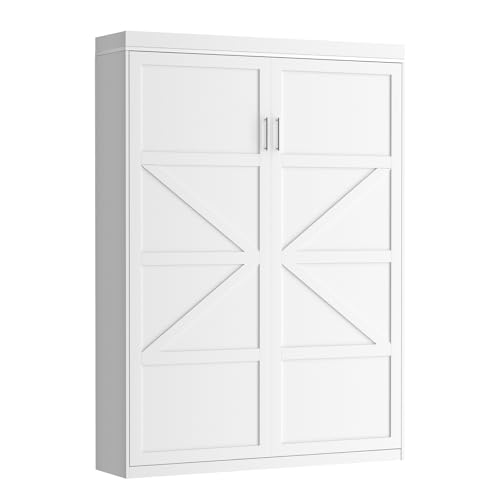
Durable Materials and Strong Support:This queen Murphy bed is built with industrial-grade MDF, plywood, and a reinforced metal frame for long-term durability. The slatted mattress base provides balanced support and improves airflow. The structure supports up to 1,000 pounds and fits most standard queen mattresses sized 60 by 80 inches and no thicker than 12 inches including pillows
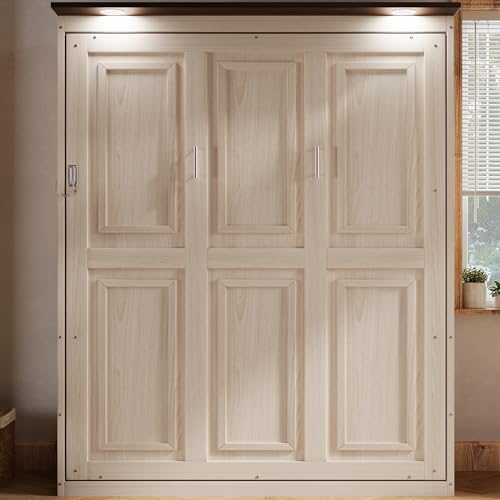
Solid Pine Wood Murphy Bed Queen:Crafted from high-quality solid pine wood + MDF, the bed frame boasts exceptional sturdiness and load-bearing capacity supports up to 500 LBS . Pine wood features natural durability and anti-deformation performance, resisting daily wear and tear. The reinforced hardware is stable structure when folded or unfolded, suitable for long-term adult use.

Farmhouse Style Murphy Bed: Our farmhouse queen size Murphy bed features a unique wood grain finish metal trim and convenient handles. Wall Murphy bed queen size combines farmhouse style and modernity, adding a beautiful, elegant touch to your room, and can fit a bedroom, home office, guest room, and study room.
Choosing a Murphy Bed Style and Finish to Match Your Decor
Now, align it with your style. Choose chocolate wood and brass for Mid-Century Modern warmth. For Maximalism, pick jewel-tone cabinetry as your bold focal point. An Industrial room needs matte black hardware and darker finishes. Coastal aesthetics call for driftwood tones and woven textures. The bed becomes your design anchor. Your next step? Measure your space to see what size fits your vision, and consider the key differences in design and functionality between wall beds and Murphy beds. Common configurations like horizontal or vertical layouts can optimize your multipurpose rooms. Ensure the wall-mounted frame you select is compatible with your wall type for a safe and secure installation.

EFFORTLESS TRANSFORMATION: Experience exceptional convenience as this sleek solid wood and veneer chest effortlessly converts into a comfortable bed, maximizing your living space in seconds

2-in-1 Multifunctional Design: This Murphy Bed Cabinet seamlessly transforms from a stylish cabinet into a comfortable platform bed, making it an ideal space-saving solution for small bedrooms, living rooms, guest rooms, apartments, farmhouses.

[Queen Murphy Bed] Bed & Storage Cabinet, maximize your space effortlessly with our Murphy bed's dual functionality. Use it as storage cabinets when folded, or unfold it into a comfortable bed when needed, , ensuring clutter-free spaces
Choosing the Right Mattress Size and Type for Your Wall Bed
mattress compatibility with the specific cabinet. You’ll match the mattress size to the frame’s listed interior dimensions. Obviously, a queen mattress requires a queen-sized cabinet. You can’t force a different size.
Now, consider thickness limitations. Most frames need a mattress under 12 inches thick. Measure the clearance from the cabinet’s closed front to its internal headboard. A thicker mattress prevents the door from shutting. You’ll find memory foam or latex often works best. Mattress weight is another critical factor, as a heavy mattress can strain the bed’s lifting mechanism and potentially exceed the bed’s safe weight capacity. For optimal performance, consider a low-profile mattress designed for this purpose.
Your key takeaway? You must verify your frame’s exact size and recommended mattress specs before buying anything.

Low profile bed frame: The queen platform bed dimension is 79.5"L x 59.5"W x 4"H. The height of black bed frame queen is ideal for those who prefer sleeping close to the floor.

Rock-Solid, 3,000 lb Capacity: Built with heavy-duty steel slats and reinforced tubular legs, this 5″ queen box spring delivers unwavering support under up to 3,000 lbs, preventing sagging and extending your mattress’s lifespan

No Box Spring Needed: Reliable steel slats are matched to your memory foam, latex or spring mattress, and you no need a boxing spring to extend the life of your mattress by using our metal queen bed frame.
How to Integrate a Desk or Storage Into Your Murphy Bed Design
Integrating a desk or storage into your Murphy bed design is a fantastic way to unlock serious functionality, especially if you’re figuring out how to make one room serve multiple roles.
Here’s the thing: you’ll need smart mechanism integration. A fold-down desk attaches directly to the bed frame. It reveals a workspace when the bed’s up. Or, build shelving around the bed’s perimeter. Think overhead cabinets and side drawers. For a built-in look, cabinet integration can be achieved by constructing separate cabinetry that the bed unit fits between, which is then all anchored securely to the wall. When selecting units, prioritize models with adjustable shelving heights to accommodate your specific storage needs. The most reliable mechanisms often come from leading manufacturers, which is a key factor in the buying guides. Comparing the space-saving mechanisms of top models is essential for smooth daily operation.
Don’t forget practicalities. Add power outlets near that desk for your laptop. Remember mattress thickness limits, typically 10-11 inches. This guarantees smooth operation. You’ll shift instantly from sleeping to working.
Your takeaway: plan these additions from the start. Now, how will you secure this multifunctional unit to your wall?

Designed for Vertical Murphy Beds Only – Exclusively compatible with vertical Create-A-Bed Murphy bed kits; not suitable for horizontal models.

[Space Saving Folding Murphy Wall Bed] This space saving wall bed is good for all-day use, especially for small apartments or studios. In the morning, just fold the full size murphy bed to create a spacious space. At night, unfold the hidden bed for a comfortable sleep.

【Smart Space-Saving Murphy Bed】This queen size murphy bed features a seamless, user-friendly folding mechanism that effortlessly converts from a stylish murphy bed cabinet into a comfortable bed in seconds. Perfect for guest rooms, offices, or studios, it instantly reclaims valuable floor space while offering a secure and sturdy sleeping solution
How Do You Safely Mount a Murphy Bed to Your Wall?
You’re wondering how to secure that massive Murphy bed so it doesn’t come crashing down—an incredibly smart question because no one wants a bed falling on them. First, confirm wall compatibility by finding structural studs, which are essential. A stud finder locates them, typically 16 inches apart. You’ll need at least three for stability. Mark them precisely. Before driving in screws, always drill pilot holes to prevent splitting the wood. For a precise pilot hole, use a 3/16 inch drill bit. Now, secure the cabinet’s top with heavy-duty L-brackets screwed firmly into those studs. Here’s the thing: wall attachment alone isn’t always enough. For ultimate safety, add floor anchoring. This prevents any tipping or shifting when the bed’s in motion, and also addresses a key concern of improper installation. Your main takeaway? Secure mounting is non-negotiable and requires meticulous prep, and you should periodically inspect the anchors to ensure the bed remains stable over time.
What Are the Benefits of Professionally Installing Your Murphy Bed?
While you’ve learned how to mount it yourself, you might be wondering if a professional installer is worth it—and that’s a smart question. A key benefit is warranty validation. Manufacturers often require pro setup for full coverage on the frame and mechanism; DIY can void it. This protects your investment for decades. Professionals also achieve significant liability reduction. They guarantee perfect structural anchoring to prevent dangerous tipping, safeguarding everyone.
Obviously, they handle everything efficiently, saving you immense time and stress. Their expertise promises correct assembly the first time. You avoid costly mistakes from complex instructions. They confirm all materials and mounting are sound.
You gain long-term peace of mind with a securely functioning bed. Your main takeaway: pro installation prioritizes safety and protects your purchase.
How a Murphy Bed Affects Your Room’s Layout and Use Over Time
Since you’re considering how a Murphy bed shapes a room long-term, you’ve hit on its real superpower: it permanently redefines your space. Its design dictates your layout for years, so choose based on daily life. Horizontal beds, extending less than 85 inches, keep floor space free, perfect for an office that hosts guests. That adaptability is key for modern room adaptation trends.
Here’s the thing: its long term durability lets your room evolve. You’ll gain 30–40 square feet daily, enabling a true multifunction area. Obviously, frequent use demands a reliable piston system. You’re not just buying a bed; you’re investing in a flexible foundation. This decision commits your room to versatility, so next, weigh how often you’ll actually fold it away.
Are Handcrafted Murphy Beds Worth the Higher Cost?
Given that handcrafted Murphy beds can run from $800 to over $8,600, you’re smart to question whether they’re a worthwhile splurge. Here’s the thing: you’re paying for investment longevity. This isn’t furniture you’ll replace in five years. The premium craftsmanship means solid wood construction and high-end hardware with lifetime warranties, ensuring decades of smooth, safe operation. That upfront cost directly fights future wear and sagging. You also gain major space savings, potentially boosting your home’s resale value. Now, a cheaper model might seem tempting, but its shorter lifespan often leads to costlier replacements. Your higher initial investment buys a permanent, high-functioning solution. So, is the cost justified for your long-term needs?