

Exploring the Different Types of Murphy Beds
If you’re exploring Murphy bed types, you’re right—it’s more than just a wall bed! You’ll choose between vertical models (needing 8.5-foot ceilings) that save floor space and horizontal ones (under 8 feet tall) perfect for lower ceilings. Integrated desks or freestanding cabinets add serious function. Your room’s dimensions and needs will point you to the right design, and understanding these core options is your perfect first step. Let’s break down each type to find your fit.
What Is a Murphy Bed and How Does It Work?
You might’ve heard of these fold-up beds called Murphy beds and wondered how they work in a real room. Fundamentally, they’re a bed that pivots on hinges to store vertically against your wall or inside a cabinet. William L. Murphy patented this clever idea over a century ago, around 1911, to solve his own tiny apartment woes. Ideal for apartment dwellers, his original goal was to transform a single room into a multi-functional space, a need that grew as the design became common in boarding houses and small city apartments, and continues to thrive in today’s tiny-house living movement. Modern designs range from simple wall‑mounted units to elaborate custom built‑in closets.
Here’s the thing: the magic is in the Murphy bed mechanics. You’ll find a counterbalance system—usually springs or gas pistons—built into the frame. You just pull a handle, and this system gently lowers the platform, mattress and all. It supports the weight so it feels almost weightless. Obviously, you don’t need a box spring.
How to Choose the Right Murphy Bed for Your Space
Now that we’ve covered how Murphy beds work, picking the right one is really about your specific room.
What size bed can my room physically handle?
Your room proportions decide everything. Start with your ceiling height. Obviously, you need an 8-foot minimum for a vertical queen bed. Horizontal models, about 70 inches tall, fit lower ceilings in lofts or basements. Then, consider your layout constraints. A vertical bed uses less wall width, while a horizontal one needs a 9-10 foot wall section but maximizes narrow room walking space. The right model can transform a home office or guest room into a comfortable sleeping area with smart space utilization. Beyond simple footprint, considering the load capacity of your ceiling or wall is essential for a safe and secure installation. You must also ensure the wall structure can handle the bed’s weight, which may require a wall structure assessment.
Should I get a vertical or horizontal model?
Match the fold to your space. Choose vertical for classic operation in deeper rooms. Opt for horizontal if your ceiling’s under 8 feet or you’re shorter, as it’s easier to pull down sideways.
Your next step is measuring your room precisely.

𝐂𝐎𝐌𝐏𝐋𝐄𝐓𝐄 𝐇𝐎𝐑𝐈𝐙𝐎𝐍𝐓𝐀𝐋 𝐌𝐔𝐑𝐏𝐇𝐘 𝐁𝐄𝐃 𝐇𝐀𝐑𝐃𝐖𝐀𝐑𝐄 𝐊𝐈𝐓 — EVERYTHING TO BUILD YOUR FULL SIZE WALL BED — Includes gas piston lift mechanism calibrated for side-fold operation (smooth open/close rated for daily use), patented 2-in-1 auto-locking stainless steel pivot plates, heavy-duty folding crossbar leg system, quick-release mattress retention strap, all mounting hardware and fasteners, plus 3 illustrated guidebooks (Horizontal Cut List Guide, Construction Guide, Assembly Handbook). No separate hardware store runs needed for the murphy bed mechanism components.
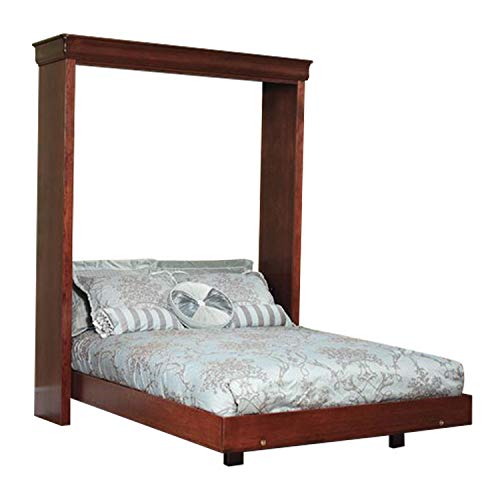
✔️ Queen Size Deluxe Murphy Bed Plans
𝐂𝐎𝐌𝐏𝐋𝐄𝐓𝐄 𝐇𝐎𝐑𝐈𝐙𝐎𝐍𝐓𝐀𝐋 𝐌𝐔𝐑𝐏𝐇𝐘 𝐁𝐄𝐃 𝐇𝐀𝐑𝐃𝐖𝐀𝐑𝐄 𝐊𝐈𝐓 — 𝐄𝐕𝐄𝐑𝐘𝐓𝐇𝐈𝐍𝐆 𝐓𝐎 𝐁𝐔𝐈𝐋𝐃 𝐘𝐎𝐔𝐑 𝐖𝐀𝐋𝐋 𝐁𝐄𝐃 — Includes gas piston lift mechanism calibrated for side-fold operation (smooth open/close rated for daily use), patented 2-in-1 auto-locking stainless steel pivot plates, heavy-duty folding crossbar leg system, quick-release mattress retention strap, all mounting hardware and fasteners, plus 3 illustrated guidebooks (Horizontal Cut List Guide, Construction Guide, Assembly Handbook). No separate hardware store runs needed for the murphy bed mechanism components.
Essential Murphy Bed Measurements and Wall Requirements
A closed queen bed needs roughly 16-21 inches of depth from your wall. Its total width requires 8-9 feet of clear wall space. Now, you must also check your ceiling height. The unit itself stands 79-90 inches tall, so your ceiling needs to be at least 8.5 feet high to avoid a collision when it’s upright. The frame rail height must also be between 9.5 and 10 inches to properly secure the folded mattress within the cabinet. For a secure and safe installation, verifying adequate structural support in your wall is a critical first step.
When opened, a queen bed projects 85-87 inches into the room. You’ll need about 10 feet of floor clearance for it to lie flat. Always measure your space against both these states. For proper operation, the standard queen mattress size of 60 by 80 inches must be compatible with your chosen wall mechanism. Before you begin assembly, gather all the required tools and hardware to ensure an efficient installation.
Vertical Murphy Beds: Maximizing Floor Space
Alright, you’re wondering how a vertical Murphy bed actually maximizes floor space. It folds upright, using your wall’s height instead of width. That vertical installation creates a compact wall footprint. This classic wall‑mounted design excels in maximizing vertical space, as detailed in comparisons with other space‑saving solutions. Its operation relies on a system of hinges, pistons, and brackets. This makes it a great choice for rooms with a narrower layout, a key distinction highlighted when comparing wall beds and Murphy beds.
Now, think about a queen-size bed’s queen dimensions on the floor. When stored, you reclaim that entire area. You can place furniture there or simply open up the room.
Here’s the thing: it needs about 88 inches of ceiling height. That’s for queen dimensions. So you’ll check your ceiling first.
Your takeaway? For a deep room with standard height, a vertical bed’s your space-saving champion. It clears the floor completely. Next, you’ll consider if your room’s depth fits the bed’s length when open.

TIME TESTED: Our kits have stood the test of time for over 35 years. If you’re going to build a high-quality murphy bed, you want it to last a lifetime. American-made steel, labor, and support are behind each kit.

𝐂𝐎𝐌𝐏𝐋𝐄𝐓𝐄 𝐌𝐔𝐑𝐏𝐇𝐘 𝐁𝐄𝐃 𝐇𝐀𝐑𝐃𝐖𝐀𝐑𝐄 𝐒𝐘𝐒𝐓𝐄𝐌 — WHAT’S IN THE KIT — Includes gas piston lift system (smooth open/close rated for daily use), patented 2-in-1 auto-locking stainless steel pivot plates, heavy-duty square tube folding legs, quick-release mattress retention strap, all mounting hardware and fasteners, plus 3 fully illustrated guidebooks (Cut List Guide, Construction Guide, Assembly Handbook). No separate hardware store runs needed for the mechanical components.
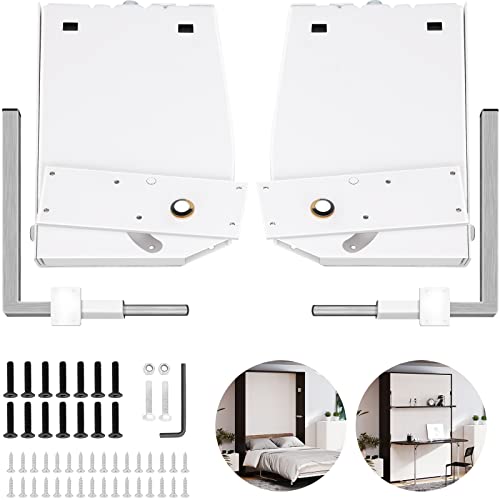
【SUPERIOR REBOUND FORCE】- One person can freely fold out or up the bed. Inside 9 premium springs, high rebound strength to ensure the whole process.
Horizontal Murphy Beds for Low Ceilings
Maybe your ceilings are too low for a vertical Murphy bed—so how do you get that space-saving magic? You turn it sideways. Horizontal models are your essential solution.
Here’s how they work. These low beds fold outward from the wall’s side, not down. That rotated 90-degree orientation needs far less vertical clearance. You can install one easily under eight-foot ceilings or tricky bulkheads. Their closed profile resembles a low credenza, about 15 inches deep, and is available in various material options like wood or metal to match your decor.
You achieve serious space optimization. The bed deploys along the wall’s width, perfect for a room narrow in depth. Opening it requires less leverage, making daily use simpler. You gain a bedroom without sacrificing your floor plan. This makes them ideal for multifunctional rooms like a home office or living room that occasionally needs sleeping accommodations. For secure installation, a sturdy wall or ceiling support is typically required to bear the mechanism’s weight. So, if vertical space is tight, a horizontal Murphy bed activates the function you need.

[Multi-Function Murphy Bed]: The Murphy bed can be folded up and put into a cabinet, saving a lot of space in any room with its dual functions. When folded, it can be used as a retro white sideboard. The simple and elegant appearance can be integrated into a variety of decoration styles.

[Horizontal Murphy Bed Full] Transform any room into a multifunctional space with our Murphy Bed. When not in use, simply fold it up to create more floor space for activities. Utilize the under-bed storage shelf to stow away bedding, pillows, or seasonal items, keeping your space tidy and clutter-free.

SAFETY FIRST: To avoid risk of injury, bed must be installed to wall and floor structure by a professional or qualified person; two people required. Bed secures to the wall and floor for maximum stability. A lock prevents accidental closing while in use.
Murphy Desk Beds: The Space-Saving Workstation
Desk ergonomics are key. The desktop height is 31 inches from the floor with a 25-inch depth, so you’ve got proper support for your computer. The hinging system even provides 17 inches of clearance so your monitors stay put. You can choose a vertical orientation to maximize wall space, with models reaching over 86 inches in height, and it’s important to consider the material quality and overall build when selecting a model for long-term durability. Leading manufacturers often design these units with integrated storage like shelves or cabinets to enhance functionality. Your takeaway: This bed eliminates the daily shuffle between work and sleep. Now, consider how much storage you’d need alongside it. For optimal results, consult detailed buying guides to compare models for your specific room size and budget.
Murphy Beds With Integrated Storage and Shelving
You’ve probably wondered how a Murphy bed could truly replace a closet or shelves. Now, models with integrated shelving answer that directly. The bed frame itself becomes a bookshelf or cabinet when closed. You gain adjustable shelves for books and deeper ones for bulkier gear. Providers offer incredible storage customization, letting you design a unit that fits your exact needs, including dedicated closet organization options for folded clothes or accessories. Here’s the thing: they’re masters of concealed compartments. Lower cabinet doors and under-bed drawers hide sheets or off-season clothes. Some even integrate hidden drink trays into side panels. A full wall unit can mimic a library, transforming a living room instantly. These designs maximize your space without sacrificing floor area. When comparing top models, it’s crucial to consider the hardware mechanism for long-term durability and ease of use.
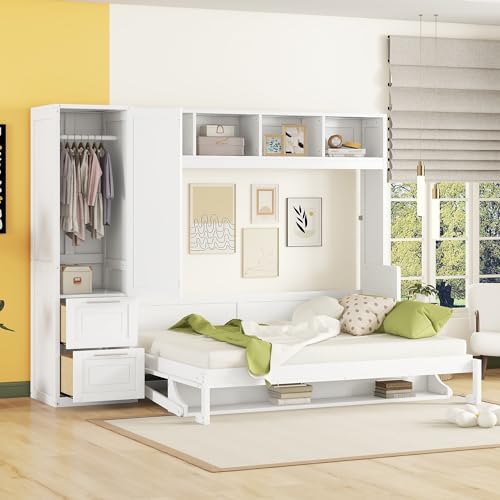
Space Saving: This murphy bed has a folding design that perfectly combines the bed and cabinet. When you wake up, you can easily push the bed inwards to use it as a cabinet during the day, which provides plenty of space for your indoor activities, When night comes, the bed can be easily pulled down, good choice for friends and guests to stay overnight

1. Murphy Bed with Small Desk: This innovative design features an integrated storage cabinet with fixed multi-layer shelving and a desk on the left side, offering organized storage for books, decor, laptops, and daily supplies, while combining functionality in one sleek unit.
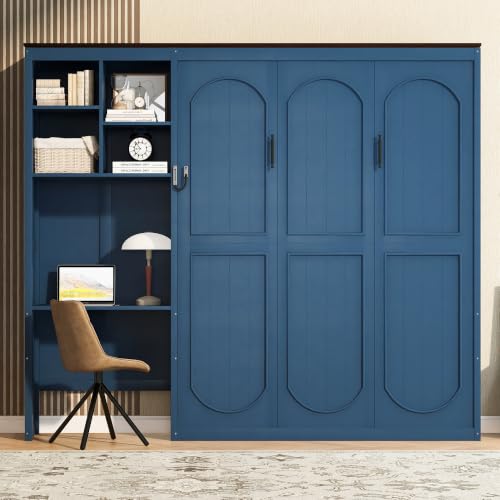
Queen Murphy Bed with Desk and Built-In Wall Sconces: This queen size murphy bed frame features a fixed multi-layer open shelving unit and integrated desk on the left side, providing dedicated space for books, decor, and daily essentials. The wall sconces offer focused lighting for reading or working. A complete space saving wall bed with desk that turns any room into a functional home office.
Bunk Murphy Beds for Maximum Sleeping Capacity
Your next consideration is likely balancing this space-saving power with easy installation.
Freestanding Cabinet Murphy Beds for Easy Setup
Now, since you’re intrigued by maximizing sleeping capacity but are wondering how to actually get a Murphy bed into your space, let’s talk about freestanding cabinet models.
These function as standalone cabinets. You fold out a queen-size bed without any wall mounting, perfect for addressing installation limitations. They’re shipped assembled, so your room transforms instantly.
Their design mimics furniture, blending seamlessly with your decor. They often incorporate storage drawers within the plywood structure. This multi-functionality solves immediate space needs.
Budget constraints can make traditional Murphy beds intimidating. This freestanding option bypasses professional installation costs. You’ll get a guest room without a permanent footprint or structural modifications.
Where to Find and Order Your Custom Murphy Bed
Your best move is to match a supplier’s specialty with your project scope. Now, you need to decide: will you assemble a kit or order a complete, finished bed?

Horizontal Mount Queen Size Full Size Twin size Deluxe Murphy Bed Hardware Kit(for the small size bed,just reduce the springs in the housing if they are too strong)

【SUPERIOR REBOUND FORCE】- One person can freely fold out or up the bed. Inside 5 premium springs, high rebound strength to ensure the whole process.

ADJUSTABLE DELUXE MURPHY BED KIT: Patented Adjustable mechanism allows you to perfectly balance the weight of your bed in seconds. A bed that is too heavy to lift, or too light to stay on the floor, is a thing of the past. The kit includes all the hardware you need to build the best Murphy Bed imaginable. All you need is a mattress, wood, and a few basic woodworking tools.