

Lori Bed vs Murphy Bed: Which Space‑Saving Solution Wins?
Deciding between a Lori Bed and a Murphy Bed means choosing between durable simplicity and mechanical convenience. A Lori Bed uses a manual, gravity-based lift with zero moving parts, betting on long-term reliability over ease. A traditional Murphy bed employs pistons for an effortless lift, but those mechanisms can eventually need service. Your choice hinges on whether you prioritize maintenance-free durability or immediate, one-handed operation.
What Exactly Are Lori Beds and Murphy Beds?
You’re asking the right question because “Lori bed” and “Murphy bed” get thrown around like they’re the same—but here’s the thing, they’re really two approaches with one core mission: hiding a bed in a wall. Their historical origins are different. The Murphy bed is the classic, patented over a century ago with a built-in spring mechanism, a product of furniture entrepreneur William Lawrence Murphy aiming to solve urban space constraints. Its evolution from a niche urban solution to a mid‑century boom in hotels and suburban homes shows its lasting appeal. A Lori bed is a modern, simpler interpretation. It often lacks that mechanical hardware, relying more on manual effort. Both represent clever architectural adaptations for squeezing function into small spaces like studios or multipurpose rooms. They transform a bedroom into an office or living area. One major advantage of these systems is their ability to maximize usable floor area while maintaining a stylish aesthetic. Now you understand their shared goal but distinct identities. A key modern innovation is the integration of a real mattress designed for vertical storage, moving beyond just a folding frame. Next, you’ll want to compare how their build quality affects daily use.
Build Quality Compared: Mechanisms, Materials, and Durability
Since build quality determines how your hidden bed holds up over years, it’s smart to compare the core mechanics and materials. Now, Lori Beds have zero moving parts—they’re a gravity‑based, manual lift. That means you won’t face any mechanism failures or maintenance concerns from pistons or springs. Their cabinet‑grade plywood and steel frame are built to last without repairs. Traditional Murphy beds rely on those pistons or springs for an easier lift. Premium models use strong hardware, but those systems can eventually leak or fatigue, a factor to consider given the possible wear on the folding hardware noted with these space‑saving solutions. These mechanisms have historical origins in wall‑mounted systems designed to make raising and lowering a mattress safe, evolving from the simple wooden frames of the early 19th century. That’s the durability trade‑off: Lori’s simplicity avoids mechanical wear, while Murphy mechanisms, even with warranties, need periodic attention. Your choice hinges on prioritizing lifelong simplicity or engineered convenience.

Horizontal Mount Queen Size Full Size Twin size Deluxe Murphy Bed Hardware Kit(for the small size bed,just reduce the springs in the housing if they are too strong) This is...
Sleep Quality: Mattress Compatibility and Firmness Compared
Its 6/10 medium-firm feel suits side sleepers over 130 pounds. It disperses weight well. Stomach sleepers may find it too soft. The gel-infused foam aids heat dissipation, though some find it sleeps warm. Its pocketed coils offer great edge support. For a Murphy bed, a low-profile foam mattress is often recommended to ensure proper clearance, a key factor addressed in any good buying guide.
Here’s the thing: motion isolation isn’t full. You might feel a partner move. It fits most Murphy beds if dimensions and weight align. Always verify your bed’s specs. Your final comfort hinges on matching firmness to your sleep style and ensuring physical compatibility. Mattress thickness and weight are critical factors for safe operation. Next, consider how each bed’s look fits your room.
Designs and Customization: Which Bed Fits Your Style?
Consider which priority wins: effortless simplicity or tailored personalization. This choice directly impacts your room’s final look. Wall beds offer extensive design and customization options compared to the often simpler designs of Murphy beds. The typical loft bed height can also be customized to match your ceiling clearance and style. An accurate ceiling height assessment is therefore crucial for a successful installation.

𝐌𝐔𝐋𝐓𝐈-𝐅𝐔𝐍𝐂𝐓𝐈𝐎𝐍𝐀𝐋 𝟔-𝐏𝐈𝐄𝐂𝐄 𝐂𝐀𝐓 𝐖𝐀𝐋𝐋 𝐅𝐔𝐑𝐍𝐈𝐓𝐔𝐑𝐄: This wall-mounted cat wall shelves kit includes a cat house, cat bed, cat tree, cat bridge, cat scratch pad, and cat climbing steps. Designed as a complete cat climbing frame, cat furniture creates the perfect playground for indoor cats to climb, perch, rest, and scratch

Build With the Experts: With over two decades of proven reliability, our kits are designed to last a lifetime, making them perfect for constructing a premium Murphy bed. Commercial grade steel, exceptional strength, and durability are behind each kit. Engineered to support up to 1,500 lbs, our kits are the ultimate solution for maximizing your living area.

Professional Custom Coat Spray-On Truck Bed Liner 2 Gallon Kit. Custom Tintable Color Kit Includes: 8 - 21 fl. oz. Cans of Tintable Truck Bed Liner Base, 8 - 8 fl. oz. Cans Custom Coat Standard Hardener, 8 - 3 fl. oz. Bottles of Custom Shop Basecoat Color Tint and 1 Custom Coat Applicator Spray Gun with Regulator. Estimated coverage is 110 to 130 square feet @ 10 mils wet film thickness.
Cost Analysis: Upfront Price vs. Long-Term Value
A Lori Bed’s upfront price is clear. You’ll pay around $2,919 for a queen, with no hidden fees. A traditional Murphy bed might start lower but installation and mechanical parts quickly add cost, especially if your project requires professional installation fees or wall modifications. Now, consider long-term value. A Lori’s simple build means zero maintenance costs. A Murphy bed’s mechanical parts will eventually wear, requiring service. Check the warranty terms, but remember warranties don’t cover your time or hassle. This is partly due to the custom engineering required for its lift mechanism. For residual value, a durable, solid-wood Lori likely retains more worth than a complex system. A Murphy bed’s final price is heavily shaped by choices like high‑end custom installations and material quality, as outlined in pricing guides.
Your takeaway? Factor in a decade of ownership. The lower-maintenance option often wins on total cost.
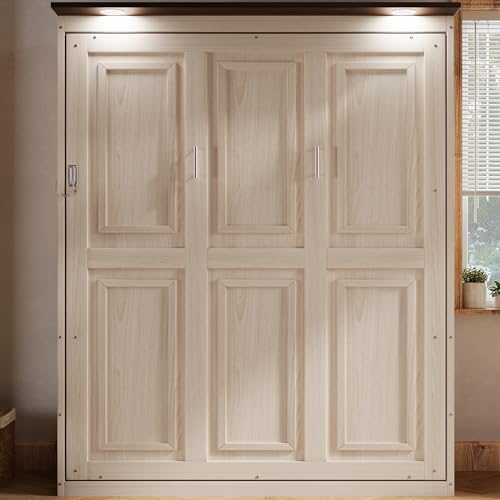
Solid Pine Wood Murphy Bed Queen: Crafted from high-quality solid pine wood and MDF, this bed frame offers exceptional sturdiness and load-bearing capacity of up to 500 lbs. Pine wood delivers natural durability and resists warping, standing up to daily wear and tear. Reinforced hardware ensures a stable structure whether folded or unfolded, making it well-suited for long-term adult use.
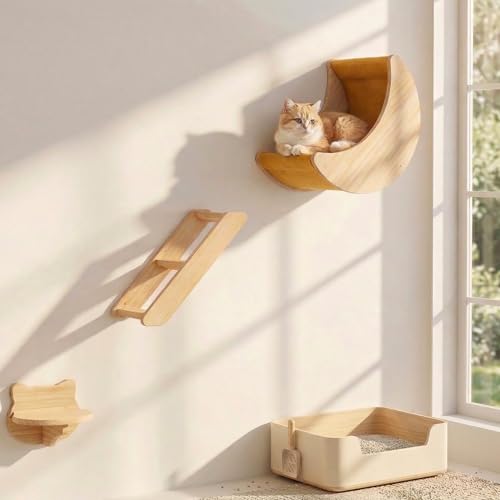
1.CREATE A VERTICAL PLAYGROUND FOR INDOOR CATS: Turn empty wall space into a fun and engaging climbing area for your cats. This cat wall shelves set encourages daily activity, jumping, lounging, and exploration while helping save valuable floor space in your home.

【Natural Style】With a rustic look, VINGLI real wood floating nightstand unfinished blends perfectly with various bedrooms or living rooms such as contemporary, modern, cottage, shabby chic, or casual spaces. Thanks to the wall mounted nightstand, you no longer have to worry about scratching the floor. It plays well as a bedside table/dresser in the bedroom, side table in the living room, and holds out-the-door necessities in the hallway
Installation and Moving: How Easy Is Setup and Portability?
You’re wondering what it actually takes to get one of these beds into your home and set up. Here’s the thing: a Lori Bed demands more mounting tools. You’ll use a stud finder and wall anchors, securing its cabinet directly into studs with long screws. The assembly process includes constructing a cabinet framework with connector bolts and attaching mechanism mounting plates before the unit can be secured to the wall. A Murphy Bed’s installation also requires finding studs, but you’re often using toggle bolts for drywall areas where a stud isn’t present. Both need a power drill and a level, but the Lori’s multi-step cabinet assembly adds complexity. For either bed, planning ahead and labeling hardware during disassembly can save significant time and confusion during a future move. A critical part of either project is taking precise wall bed measurements to ensure proper fit and safe operation. Obviously, portability is low once installed; those wall anchors are permanent. Moving either bed means disassembling major components, so plan for a semi-permanent placement. Conducting a thorough wall reinforcement assessment is crucial for safe installation and operation of any wall-mounted bed.

【SUPERIOR REBOUND FORCE】- One person can freely fold out or up the bed. Inside 5 premium springs, high rebound strength to ensure the whole process.
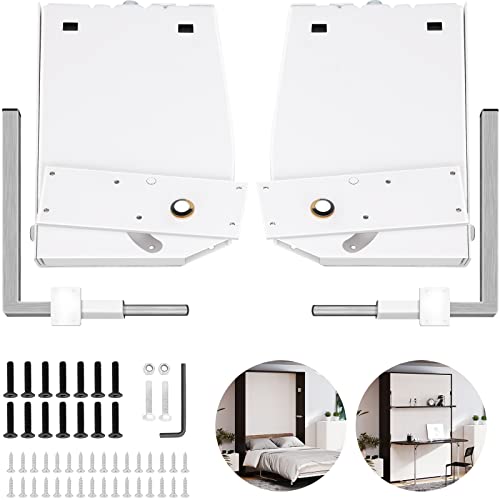
【SUPERIOR REBOUND FORCE】- One person can freely fold out or up the bed. Inside 9 premium springs, high rebound strength to ensure the whole process.

Vertical Mount King Size Deluxe Murphy Bed Hardware Kit(It may fit Queen size,just reduce the springs in the housing if they are too strong)
Is the Lori Bed’s Manual Lift Too Difficult?
Now, about that manual lift you’re wondering about—it’s entirely mechanism-free, meaning there are no springs, pistons, or coils to operate it. Obviously, this requires some manual effort. You control the platform directly, tilting it about 15 degrees and pressing at specific points. You can’t do it alone. A two-person lift is recommended for safe operation and engaging the bearing system.
Here’s the thing: this design maximizes long-term reliability by eliminating failure-prone parts, but it impacts immediate user accessibility. The key takeaway? Its simplicity is a trade-off. It’s not difficult with a partner, but you’ll always need one. This simple to lift and lower operation aligns directly with the product’s core benefit statement. This contrasts with a DIY Murphy bed project, which relies on heavy‑duty hinges and pistons for its operation and requires a proper safety check for secure installation. Next, consider how this hands-on requirement fits your daily routine.
Matching the Right Wall Bed to Your Space and Lifestyle
Finding the perfect wall bed can feel overwhelming—do you prioritize space-saving, durability, or ease of use? Start with your space. For small studios, choose a bed that folds into shelving, freeing your floor. Consider orientation; models fit parallel or perpendicular to walls. Your lifestyle dictates the mechanism. A manual lift suits renters avoiding lease violations and those who value simplicity. For sleep ergonomics, verify the mattress size, from twin to queen, supports proper rest.
Now, examine craftsmanship insights. Durable HPL construction withstands moves, a key for renters. Homeowners appreciate long-term durability and integrated shelves that prevent floor scratches. Your room’s function is pivotal. A desk combo creates a daytime office, transforming a guest room. Match the bed’s features to your daily reality for a seamless fit.

Multi-Functional Wall Shelves: These suspended shelving units offer versatile display solutions. By installing matching shelves atop the brackets, they create rich wall decor effects. The floating design can form either a long bookshelf or transform into a vertical storage unit, showcasing all kinds of decorative items

Bedside Wall Organizer for Daily Essentials: Keep your phone, remote, glasses, earbuds, cosmetics, small book, or other bedside items within easy reach. This bedside wall organizer creates a compact storage spot next to your bed without taking up floor space, making it a practical choice for small bedrooms, dorm rooms, loft beds, bunk beds, and RV sleeping areas.

【Basic 3 Set Floating Wall Shelves】Just make your own storage space by using DOLLFIO 3 sets of wooden floating wall shelves! You can combine our floating wall shelves in any way you want. Our floating wall shelves are great for all-type rooms because they process a simple & simple design.
Lori Bed vs. Murphy Bed: Final Checklist to Decide
All right, you’ve figured out how a wall bed fits your space, but you’re still stuck on the big choice: a manual Lori Bed or a traditional Murphy bed with a mechanism.
What’s the long‑term care like?
A Lori Bed demands zero hardware maintenance. Its lack of moving parts means nothing to grease or replace. A traditional Murphy bed’s springs or pistons require periodic checks, though this helps them operate smoothly for decades.
What’s the real cost of ownership?
Consider warranty differences. Some Murphy beds offer lifetime coverage on their engineered mechanisms. Lori Bed’s warranty covers durable materials, betting its simplicity won’t fail.
Your decision hinges on prioritizing hands‑off durability versus assisted‑ease mechanics. Which fits your life better?