What Size Is a Bunk Bed Mattress? (Twin, Twin XL, Full)
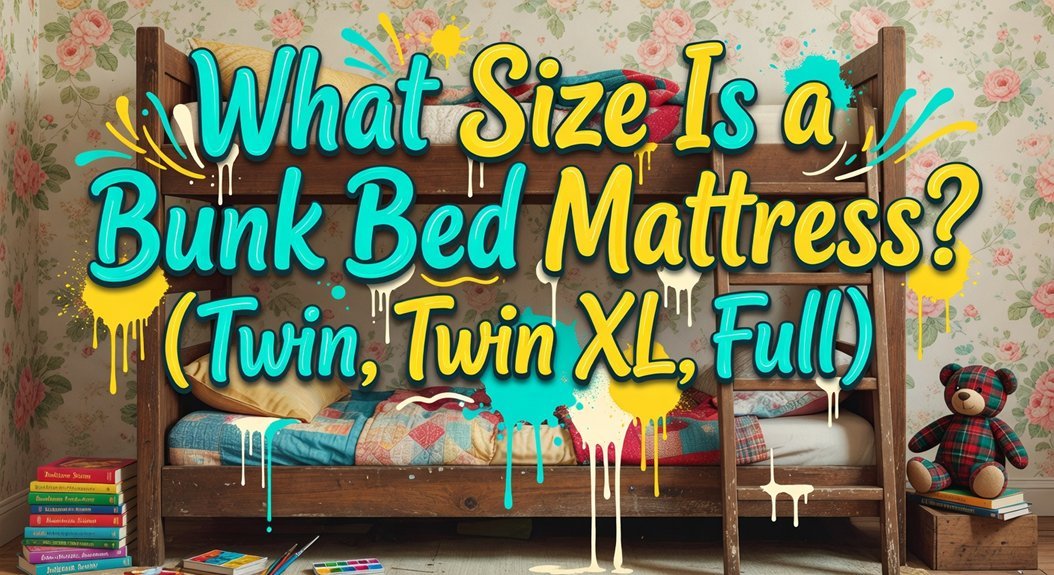
You’ve probably heard “twin” and gotten confused. The three main bunk bed mattress sizes are Twin (38″x75″), Twin XL (38″x80″ for taller folks), and Full (54″x75″). But obviously, you must measure your specific frame first, as a mismatch is a safety risk. Getting this right is your essential first step before comparing any models.
The 3 Bunk Bed Mattress Sizes You Need to Know
You’re wondering what size mattress fits a bunk bed, and it’s smart to check — because grabbing the wrong one is a safety hazard. You’ve fundamentally got three core sizes: Twin, Twin XL, and Full. For tight space limitations, the standard Twin (38” x 75”) is your classic choice, especially for kids. Budget considerations often make it the frontrunner, too. A twin-over-twin bunk bed commonly uses this size mattress with a total height typically between 60 and 70 inches, and its overall length will be around 78‑80 inches including the frame.
Now, consider a Twin XL (38” x 80”) if you need five extra inches of length. It’s perfect for taller teens or for college dorms where every inch counts. A Full mattress (54” x 75”) offers more width for spreading out, a nice perk for a bottom bunk in guest rooms. So, your first step? Grab a tape measure and check your bed’s actual frame dimensions before you do anything else. Pay close attention to low‑profile designs to ensure a proper and safe fit within standard bunk bed frames, and remember that a full-over-full configuration requires adequate ceiling clearance.
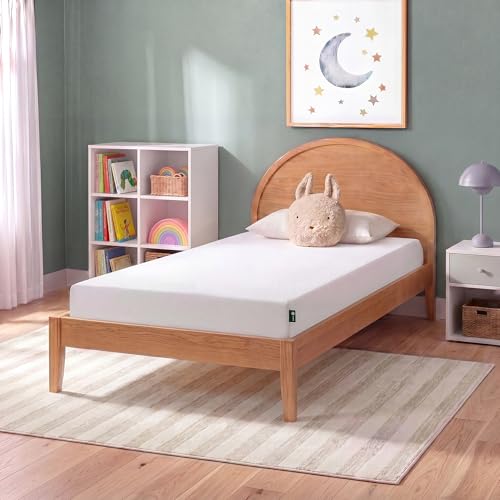
ZINUS GREEN TEA MEMORY FOAM – Patented zoned pressure relief, medium firm feel, breathable knitted cover, and a durable base foam — every layer engineered to contour, support, and move with your body for a better night's sleep.

VENTILATED GEL FOAM: Gel-infused memory foam mattress enhances airflow and regulates temperature, helping you stay cooler and more comfortable throughout the night for deeper, uninterrupted sleep.
ZINUS GREEN TEA MEMORY FOAM – Patented zoned pressure relief, medium firm feel, breathable knitted cover, and a durable base foam — every layer engineered to contour, support, and move with your body for a better night's sleep.
Choosing Between Twin, Twin XL, and Full Bunk Bed Mattresses?
Now, you’re wondering how to choose between these three sizes, since obviously a standard twin isn’t always the best fit. Here’s your guide. First, consider the sleeper’s size. A Twin XL gives five extra inches of length for anyone over 5’10”, solving that legroom problem. A Full offers 16 more inches of width than a twin, perfect for an older child wanting space. Your bunk bed’s configuration dictates options, too; top bunks often only fit twins. This limitation is especially important for traditional stacked bunks where structural integrity is paramount, so always verify the safe load limit for each bunk. You’ll also face availability constraints, as twin mattresses are far more common for bunks than Full or Twin XL sizes. Finally, factor in price considerations, as larger mattresses typically cost more. For any bunk setup, especially for children, prioritizing material safety and ventilation is crucial for a healthy sleep environment. Match the mattress to the person and the bed frame for a safe, comfortable fit.

TRADITIONAL SUPPORT, BETTER FOR THE PLANET – This reliably comfortable hybrid will provide even support night after night and arrives to you in a new smaller box that reduces its carbon footprint

SmartS Spinal Support: This supportive 6 inch twin xl mattress features SmartS Coil technology that adapts to your body, offering tailored support throughout the night. Novilla twin xl size mattress promotes healthy spinal alignment, making this twin xl mattress ideal for growing teens and young sleepers

【Stay Cool, Wake Refreshed】The mattress xl features an airbreeze knitted cover that enhances breathability, actively wicking away heat and moisture for a dry sleep surface. Beneath the cover, the NanoGel memory foam works throughout the night to draw excess body heat away, delivering a refreshed and cushioned feel that helps you stay asleep longer. Together, this twin xl mattress create an optimally cool environment—so you wake up feeling rejuvenated, night after night.
How to Measure Your Bunk Bed Frame for a Perfect Fit
So you’ve settled on a mattress size, but figuring out if it’ll actually fit your space and frame is the next logical puzzle.
How do I start measuring?
Begin by verifying the frame dimensions against your room. A typical twin-over-twin frame is about 80 inches long, 43 inches wide, and differentially high. You’ll measure the actual frame you have or plan to buy. Confirm its overall height, width, and length, paying particular attention to the guardrail height to ensure it meets safety standards. This is especially important for children’s rooms, where designs like traditional twin‑on‑twin are common.
What details are critical?
Obviously, check the frame material options and assembly tool requirements. You also need to measure the under-bed height for storage. Finally, confirm the frame accommodates your exact mattress size without any overhang. Your takeaway is to meticulously measure before committing. This prepares you for matching specific mattresses to each bunk, and reviewing top models can highlight key weight capacity and safety features.

Pressure Relief Memory Foam: This twin mattress uses patented premium memory foam material that provides balanced support while effectively absorbing and evenly distributing body pressure. It greatly alleviating the reaction force on body and relaxing muscles. The stress on joints in contact with the mattress is minimized, which will not add burden to the body while asleep.

Unparalleled Quality Control – You can rest easy knowing your mattress is made with high standards and eco-conscious practices. Our global production includes U.S.-based and overseas factories for consistent quality. More than 90% of mattress orders are fulfilled by our U.S. factories. Wake up feeling refreshed every morning.

COOLING GEL MEMORY FOAM - Designed with gel-infused memory foam and a breathable structure, this twin mattress promotes continuous airflow and helps reduce heat buildup. It helps regulate body temperature and keeps your sleep surface cool and comfortable throughout the night.
Matching Mattress Sizes to Top and Bottom Bunks?
Absolutely, matching mattress sizes to top and bottom bunks can feel like a tricky puzzle, but you’ve got the right pieces. Mixed sizing safety is your prime concern. You can’t just swap sizes; a queen or king is prohibited on top due to weight and width. Common safe setups include a twin (38”x75”) over a full (54”x75”). For adult bunk considerations, you’d look at XL versions. A twin XL (38”x80”) top over a full XL (54”x80”) bottom accommodates taller sleepers uniformly. When selecting a loft or bunk bed, you must also consider appropriate headroom clearance to ensure comfort and safety. You’ll always measure your frame’s interior first. Remember, the top bunk typically limits mattress thickness to 5-6 inches for safety. This thickness is crucial for maintaining proper guardrail placement as a gap between the mattress and rail can be a falling hazard. The mattress support system, whether it’s a platform slat foundation or another type, must be compatible with the bunk bed frame for stability. Your goal is a secure fit matching the frame’s design. Now, you’re ready to guarantee a perfect match.

Durable Square Tube Frame: The sturdy square tube frame provides maximum support with a weight capacity of 400 lbs, ensuring safety and stability for a good night's sleep.

Maximize Space with 3 Sleeping Areas: Designed with a twin over full bunk bed and pull-out trundle, this metal triple bunk bed provides three separate sleeping spaces while taking up minimal floor area. Perfect for shared bedrooms, sleepovers, guest rooms, and dormitories
Suitable Support for Everyone and All Sleep Positions: Matress of EGOHOME has a high degree of fit with body curve, it will deform with changes in sleeping posture, filling the gap between your body and the mattress, advantage for your spine and promoting smooth blood circulation throughout the body. It also reduces the noise interference caused by turning over, effectively promotes perfect deep sleep.
Understanding Twin XL and Full XL for Taller Sleepers
When you’re puzzling over how to accommodate taller sleepers in bunk beds, understanding the difference between Twin XL and Full XL is your key solution.
A Twin XL gives you a 38-inch width but adds 5 pivotal inches in length, hitting 80 inches total. That’s identical to a queen’s length, perfect for teens. A Full XL keeps a 54-inch width and also extends to 80 inches long, a great pick for a taller adult on a bottom bunk. This space‑saving design is a cornerstone of furnishing small bedrooms efficiently.
Your main hurdle is frame compatibility. Most standard twin bunk frames only fit the 75-inch length. You’ll need a specific Twin XL or Full XL bunk bed frame to avoid an overhang, a consideration shared when planning for a wall‑mounted Murphy bed to ensure proper fit within the room. For material considerations, remember these longer mattresses, especially memory foam, need proper slat support across their full span. When selecting these specialized frames, paying close attention to sturdy frame construction is non‑negotiable for safety and durability. For optimal safety and comfort in a loft setup, prioritize finding a mattress with strong edge support.
Your takeaway: measure your frame first, then choose the XL that fits both the sleeper and the structure.
Your Final Bunk Bed Mattress Buying Checklist
Steering through that final list of mattress requirements is your last step, so let’s demystify the essential details, turning confusion into confidence.
First, physically measure your frame’s inside length and width. You need a precise 1-2 inch clearance all around. Top bunks typically limit thickness to 6 inches for safety, while bottom bunks can handle 8-10. This is especially critical when selecting a mattress for full-size bunk beds. Their space-saving design is a major reason families choose them, but it demands careful sizing.
Now, match that to a standard size. A twin (38”x75”) fits most top bunks. Just verify your frame’s weight capacity and any stated size, especially for a twin XL or full. Compare models like the Storkcraft Caribou and the Max & Cooper Twin‑Over‑Full to see how their designs accommodate different mattress sizes.
What about safety and feel?
Prioritize certified, low-VOC materials. Your firmness considerations matter most for support, especially for kids. Choose breathable fabrics for the top bunk.
Your final check? Verify every specification from your frame’s manual aligns with your mattress choice.

[Experience Blissful Comfort] - Drift into a world of luxurious comfort on our memory foam mattress. The memory foam molds to your body, relieving pressure points for unparalleled rest.
VENTILATED GEL FOAM: Gel-infused memory foam mattress enhances airflow and regulates temperature, helping you stay cooler and more comfortable throughout the night for deeper, uninterrupted sleep.

8 INCHES NARROWER THAN A REGULAR TWIN: Measuring 75”x30”, this narrow mattress is more compact than a regular twin mattress, making it an ideal choice for tight spaces, bunk, trundle, day beds, RVs, and more