

Murphy Bed vs Trundle Bed: Which Saves Space Better?
You’re spot on to compare these two space-savers—they tackle the problem in opposite ways. A Murphy bed folds up into the wall, freeing the entire floor footprint for your daily activities. A trundle bed slides out horizontally, so one bed frame is always a permanent obstacle. For truly transforming a room’s function, the vertical storage of a Murphy bed is the clear space-saving champion. Let’s break down why that distinction shapes everything from comfort to cost.
What’s the Core Difference Between a Murphy Bed and a Trundle Bed?
You’re probably wondering why these two space-saving beds get mentioned together, since their core difference is pretty dramatic. A Murphy bed is all about Vertical Storage; it folds up into a wall cabinet, completely clearing the floor. It’s like a heavy-duty closet for your mattress. This vertical lift generally saves more usable floor area, as it can be paired with built‑in shelving or desks, making it ideal for home offices or multipurpose rooms. A trundle bed is a standard frame with a second, smaller bed on wheels stored underneath. You just pull it out sideways.
Here’s the thing: their approach to Space Optimization is fundamentally opposite. One goes up into the wall, the other slides out across the floor. This difference shapes everything from their design to their daily use. That choice between vertical and horizontal storage is your starting point for deciding between them. For Murphy beds, this space-saving benefit comes with trade-offs like the need for professional installation and wall reinforcement.
Which Bed Frees Up More Daily Floor Space?
Now, if that vertical versus horizontal difference seems dramatic, you’re right to ask which one actually frees up more floor for daily use. The winner is clearly the Murphy bed. Its space reclamation patterns are total, clearing the bed’s entire footprint instantly for your daytime activity dynamics. You can convert that area into a home office or workout zone. This vertical folding mechanism relies on a system of specialized hinges and pistons to move the heavy mattress safely. A trundle bed, however, always keeps a twin bed’s footprint on the floor. It’s a permanent obstacle. This fundamentally limits how you can rearrange or use the room. For maximum daily usable square footage, especially in a studio, the Murphy bed’s complete floor liberation is unmatched. It transforms the room’s function. This vertical transformation is directly comparable to the efficiency of a well-designed loft bed, which also leverages unused air space. Proper installation with robust hardware and safety mechanisms is essential for this daily transformation to be reliable and secure. So, which choice truly enables a multi-purpose space?

【SUPERIOR REBOUND FORCE】- One person can freely fold out or up the bed. Inside 5 premium springs, high rebound strength to ensure the whole process.

🛏️【Complete Queen-Vertical Murphy Bed Kit】Finished size reference: 87-1/8-inch H x 65-7/8- inch W x 15-7/8- inch D (closed) x 87 inches deep (open).A complete Murphy bed queen hardware kit can easily mount your cabinet folding bed on the wall and save space for your guest room & living room.

𝐂𝐎𝐌𝐏𝐋𝐄𝐓𝐄 𝐇𝐎𝐑𝐈𝐙𝐎𝐍𝐓𝐀𝐋 𝐌𝐔𝐑𝐏𝐇𝐘 𝐁𝐄𝐃 𝐇𝐀𝐑𝐃𝐖𝐀𝐑𝐄 𝐊𝐈𝐓 — EVERYTHING TO BUILD YOUR FULL SIZE WALL BED — Includes gas piston lift mechanism calibrated for side-fold operation (smooth open/close rated for daily use), patented 2-in-1 auto-locking stainless steel pivot plates, heavy-duty folding crossbar leg system, quick-release mattress retention strap, all mounting hardware and fasteners, plus 3 illustrated guidebooks (Horizontal Cut List Guide, Construction Guide, Assembly Handbook). No separate hardware store runs needed for the murphy bed mechanism components.
Which Bed Sleeps More People Comfortably?
Which Bed Sleeps More People Comfortably?
If you’re weighing how many friends or family members can comfortably spend the night, you need to compare real sleeping arrangements, not just numbers on a spec sheet. A Murphy bed offers superior comfort for couple sleeping. Its standard mattress supports two adults fully, unlike a trundle‘s thinner secondary pad. For shared use, the Murphy’s platform holds 600-800 lbs evenly. A trundle technically sleeps two, but its lower bed is often sized for a child. You’ll find the Murphy better for adult guests, while trundles work for kids. Obviously, both max out at two sleepers, but comfort differs drastically. A full-over-full trundle bunk bed configuration can increase capacity for family hosting by sleeping up to three people comfortably with its combined sleeping solutions, and choosing a model with a sturdy slat system is essential for long-term support and safety. When selecting a trundle bunk, prioritize models with clear safety certifications and weight limits for peace of mind. Your next question should be about mattress quality for each setup.
How Do Murphy and Trundle Bed Mattresses Compare for Comfort?
Now, a trundle’s thinner mattress is for occasional use. It lacks proper support, often causing restless nights if used regularly. This leads to a clear mattress lifespan comparison; the trundle mattress wears faster. In contrast, a suitable Murphy bed mattress must balance comfort with specific requirements for thickness and weight to ensure safe operation of the folding mechanism. Prioritizing a low-profile mattress construction from foam or hybrid materials is key for a proper fit. Selecting one often involves comparing slim-profile hybrid models that provide durable support without being too heavy.
How Do Installation and Daily Operation Differ?
You’re probably wondering how these beds actually work in your space, beyond just the mattress comfort we covered.
Their installation complexity is the first major split. You assemble a trundle bed like standard furniture. A Murphy bed usually requires professional help. It often needs secure mounting to your wall, ceiling, and floor for safety. A proper DIY installation demands careful planning for wall reinforcement and stud location to safely handle the weight and motion and typically involves using specific tools and hardware for secure wall anchoring, much like securing a bunk bed. For a fully custom build, you must also understand the process of designing and cutting the frame components to achieve a proper fit.
Daily use demands different operational effort. You simply pull the trundle out like a drawer. You’ll fold a Murphy bed up and down daily, which needs consistent effort but skips daily bed-making. The trundle always keeps its main bed footprint, while a folded Murphy bed frees your entire floor. So, choose based on your willingness for upfront setup versus daily handling.

Horizontal Mount Queen Size Full Size Twin size Deluxe Murphy Bed Hardware Kit(for the small size bed,just reduce the springs in the housing if they are too strong)
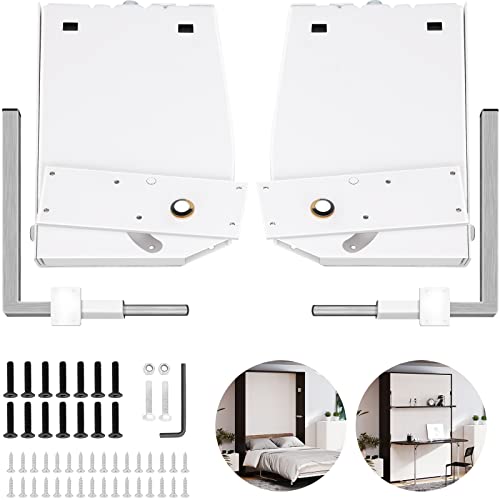
【SUPERIOR REBOUND FORCE】- One person can freely fold out or up the bed. Inside 9 premium springs, high rebound strength to ensure the whole process.

𝐂𝐎𝐌𝐏𝐋𝐄𝐓𝐄 𝐌𝐔𝐑𝐏𝐇𝐘 𝐁𝐄𝐃 𝐇𝐀𝐑𝐃𝐖𝐀𝐑𝐄 𝐊𝐈𝐓 — 𝐄𝐕𝐄𝐑𝐘𝐓𝐇𝐈𝐍𝐆 𝐓𝐎 𝐁𝐔𝐈𝐋𝐃 𝐘𝐎𝐔𝐑 𝐖𝐀𝐋𝐋 𝐁𝐄𝐃 — Includes gas piston lift mechanism (smooth open/close rated for daily use), patented 2-in-1 auto-locking stainless steel pivot plates, heavy-duty square tube folding legs, quick-release mattress retention strap, all mounting hardware and fasteners, plus 3 illustrated guidebooks (Cut List Guide, Construction Guide, Assembly Handbook). No separate hardware store runs needed for the murphy bed mechanism components.
What’s the Cost Difference Between Murphy Beds and Trundle Beds?
All right, you’re wondering why Murphy beds often cost so much more than trundle beds—that’s the core of the difference. Your average trundle bed costs between $205 and $630, while a basic Murphy bed typically starts around $1,500. You can find a simple trundle kit for roughly $400. Now, why is one so much pricier? You’re buying more than furniture. A Murphy bed’s structure requires professional installation into your wall, ceiling, or floor for safety. Its mechanism is complex, often featuring built-in cabinets or desks. This higher initial investment explains the availability of Murphy bed financing and robust Murphy bed warranties. When choosing furniture that maximizes space and function, like a bunk bed with an integrated dresser, assessing durability and safety standards is equally critical for long-term value. For a fully custom Murphy bed with high‑end materials and complex features, total project costs can easily reach $5,000 or more. Your takeaway: trundle beds are affordable, temporary solutions; Murphy beds are a durable, long-term investment. The final price can vary significantly based on choices like material quality and built‑in storage options detailed in pricing guides.

【2-in-1 Multifunctional Bed】Murphy cabinet bed easily transforms between a comfortable bed and a sleek cabinet, maximizing space. Ideal for apartments, guest rooms, and multifunctional living areas

[Farmhouse Style]No matter how your style changes, this wood frame has a minimalistic look that allows it to stand alone or match well with any décorlook to it without being overly trendy. This wood bed dresser brings a natural accent to your home.

Farmhouse Style Murphy Bed: Our farmhouse queen size Murphy bed features a unique wood grain finish metal trim and convenient handles. Wall Murphy bed queen size combines farmhouse style and modernity, adding a beautiful, elegant touch to your room, and can fit a bedroom, home office, guest room, and study room.
When Is a Murphy Bed the Best Choice?
When Is a Murphy Bed the Best Choice?
Now, consider budget limitations. A quality Murphy bed is a significant investment, as its cost reflects custom engineering and premium materials like solid wood and specialized hardware. It makes the most sense when you’re committing to your space long-term. You’re paying for durable, built-in furniture that elevates a room’s design and function. Obviously, you need proper ceiling height and wall space for it to operate safely, and professional installation can add to the overall cost due to its installation complexity.
Your takeaway: Choose a Murphy bed for a permanent, space-saving solution in a multi-use room. Next, you’ll weigh when its simpler alternative might be a better fit.

【Dual Functionalit】Bed & Storage Cabinet, maximize your space effortlessly with our Murphy bed's dual functionality. Use it as storage cabinets when folded, or unfold it into a comfortable bed when needed, ensuring clutter-free spaces

Farmhouse Style Murphy Bed: Our farmhouse queen size Murphy bed features a unique wood grain finish metal trim and convenient handles. Wall Murphy bed queen size combines farmhouse style and modernity, adding a beautiful, elegant touch to your room, and can fit a bedroom, home office, guest room, and study room.
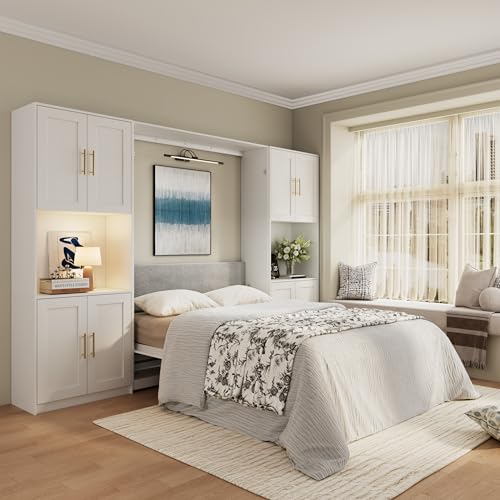
【Space-saving design】: the Murphy queen bed folds down and up against the wall, freeing up floor space in any room. The wall bed is the ideal space-saving piece of furniture for a multi-purpose guest room, home office or home gym.
When Is a Trundle Bed the Best Choice?
It also excels in small apartments or rentals. You get rental flexibility since it requires no wall mounting or permanent installation. Just slide it under your main bed frame. Here’s your takeaway: choose a trundle when you need a simple, safe, and temporary second bed. Does your space need a more permanent, hidden solution?

Excellent Versatility: The twin daybed can be effortlessly transformed from two single beds to a spacious king-size bed, whether it is for daytime use or overnight stays, this sofa bed can easily meet your various needs.

Space-saving trundle bed with folding legs and 6 lockable casters, easily stores under a daybed or stands upright to maximize bedroom or guest room space.

【2 in 1 Twin Daybed】 This modern, simple and stylish arched 2in1 daybed adopts a pull out trundle design, which can be turned into two single beds after being pulled out, allowing you to easily switch between sofa and bed. It combines the functions of sofa and bed, making full use of every inch of space for efficient layout in small apartments or limited space. It is very suitable for small apartments, living rooms, home offices or guest rooms.
Murphy Bed vs. Trundle Bed: How to Make Your Final Decision
Since you’re weighing these space-saving beds, you’re probably stuck on whether to prioritize permanent floor space or simpler temporary sleeping. Your final decision hinges on future resale value and design customization options. Murphy beds win for versatility, transforming a room completely and boosting a home’s appeal. Trundle beds offer fewer design customization options but provide a constant sleeping solution.
Choose a Murphy bed if you need maximum floor space recovery, like for a home office. Opt for a trundle if you can accept a permanent twin footprint for guests. Your room’s layout dictates this; wall space favors a Murphy, while floor clearance suits a trundle.
Ultimately, decide if you value a multifunctional room or a simpler, always-ready bed.