What Is a Loft Bed? A Quick Guide to Space‑Saving Bunk Beds
You’re wondering if a loft bed is just a fancy bunk bed. Here’s the thing: it’s a single raised bed that cleverly trades empty air for valuable floor space, typically lifting the mattress 4 to 6 feet high. The open area underneath becomes a desk nook or cozy den, which is perfect for tight rooms. Obviously, it’s a space-saving game-changer, and understanding the details helps you decide if it’s right for your space.
What Is a Loft Bed? Core Design and History
Ever wondered how to get a whole desk or cozy nook into your cramped room? That’s exactly what a loft bed does. It’s an elevated single bed frame that leaves the space underneath completely open. You access it via a ladder or stairs, and it’s a real space-saver, providing a cost‑effective sleeping solution for tight quarters.
Now, its history is fascinating. You’ll find early bunk-like setups on 15th-century ships. These engineering marvels used wood and rope. Lofts later appeared in barracks and prisons. Their move into homes, with playful designs, really took off in the 1960s. Modern material innovations in wood and metal then perfected the form. A college student even patented a key design in 1984. Loft beds evolved from mass‑produced bunk beds, which became widely standardized in the early 20th century for dormitories and homes, reflecting a broader historical use for maximizing space in dormitories and military barracks.
Loft Bed vs. Bunk Bed: The Key Differences
While you’re probably thinking both beds stack things vertically, here’s the key difference: a loft bed is for one sleeper and transforms the space below into a desk or play area, whereas a bunk bed is for two or more sleepers and uses that lower area for another mattress. The sleeping platform of a loft bed is typically set between 4 to 6 feet high, though most standard lofts sit within a typical height range of 5 to 6 feet.
Now, your safety comparisons are similar—both require sturdy guardrails. But ceiling considerations really diverge. Loft beds need higher clearance for that functional space below, so measure carefully, and someone who is 5’2″ should ensure there is adequate headroom for sitting beneath it. Bunk beds often work better in rooms with lower ceilings. Obviously, bunk beds maximize sleeping spots, while lofts maximize usable floor space. That distinction shapes your entire room’s purpose and layout.
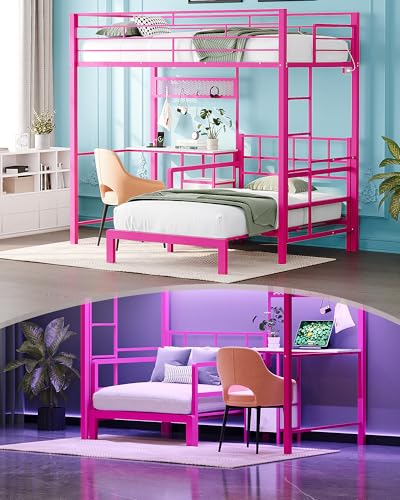
【Flexible & Family-Friendly】The lower bunk features a pull-out design, easily converting into a cozy sofa or a single bed. Fully movable, it lets you rearrange your space as needed—whether providing separate sleeping zones for children to minimize disturbance, or creating a private area when guests stay overnight. This multifunctional bunkbeds adapt to your life, offering a smart space-saving solution for small sapces and multi-child families.

【2-in-1 Convertible Design – Grows with Your Family】This twin XL over twin XL bunk bed can be easily separated into 2 independent beds – one twin XL loft bed and one twin XL platform bed. Whether you need a shared sleeping solution today or 2 separate beds for different rooms tomorrow, this separable bunk bed adapts to your changing needs. Perfect for siblings sharing a room or for creating a guest bed setup.

【2‑in‑1 Convertible Design – Adapts as Your Family Grows】This full XL over full XL bunk bed can be separated into two independent beds – one full XL size loft bed and one full XL size platform bed. Whether you need a shared sleeping solution today or 2 separate beds for siblings moving into their own rooms tomorrow, this separable bunk bed grows with your family. Use the split units as everyday beds or spare guest beds – ultimate flexibility for changing needs.
How a Loft Bed Maximizes Your Space
If you’re wondering how a loft bed actually creates more room, here’s the core idea: it trades unused air space for valuable floor space. It lifts your sleeping area up, freeing the entire area underneath for a desk, seating, or storage. This conversion is practical; you’ll install it in a standard-height room and gain a whole new functional zone. This makes loft beds ideal for maximizing usable area where horizontal floor-plan constraints are severe, especially models that incorporate integrated desks and dressers to combine sleep, work, and storage in one efficient footprint. This technique of raising the bed with a frame or platform is a popular space-saving lofting idea that also improves under-bed airflow.
Here’s where space psychology helps. By establishing a defined sleeping zone above and a living zone below, you create visual expansion. Your eye perceives two separate areas, making the entire room feel larger and less cluttered than if everything were competing on one floor.

【Flexible & Family-Friendly】The lower bunk features a pull-out design, easily converting into a cozy sofa or a single bed. Fully movable, it lets you rearrange your space as needed—whether providing separate sleeping zones for children to minimize disturbance, or creating a private area when guests stay overnight. This multifunctional bunkbeds adapt to your life, offering a smart space-saving solution for small sapces and multi-child families.

Heavy Duty Loft Bed with Wall Anchors – Eliminate wobbling with 2 included wall anchor brackets. Supports up to 350 lbs for long-lasting stability. No shaking, no squeaking.

L-Shaped Desk + 8 Large Fabric Drawers – Spacious L-shaped desktop for studying, gaming, or crafting. 8 oversized fabric drawers with flat tops double as display shelves for books, photos, or plants.
Multifunctional Features and Customization Ideas
Now that you’ve seen how a loft bed frees up the floor, you might be wondering how to actually use that new space. This is where multifunctional features shine. You can integrate a built-in wooden desk for your specific study styles, or opt for underbed dressers and wardrobes. Some models even use storage staircases—each step is a drawer—instead of a basic ladder. Many designs are praised for their easy-to-assemble step ladders and prioritize safety with integrated safety rails. For a dedicated workspace, a queen-size loft bed with a built-in desk offers a complete, space-saving solution.
Your material choices, like premium solid wood or metal, directly support these features with rock-solid stability. You’re not locked into a single look, either. You can customize finishes and add-ons like shelving. Obviously, these beds are versatile, handling up to 2,000 lbs for nightly use.
Ultimately, you’re designing a personalized station. So, which integrated feature would best solve your space challenge?

[Queen Loft Bed with Built-In Desk] Make the most of your bedroom with this queen size loft bed with desk, featuring a built-in workstation beneath the elevated sleeping platform. The spacious desktop provides room for a monitor, laptop, books, or study supplies, creating a practical area for homework, gaming, studying, or daily work without requiring a separate desk.

Queen Loft Bed with Built-in Desk & Storage: This space-saving loft bed combines a full-size workstation desk with multiple storage solutions - featuring 2 small shelves and 1 large shelf underneath the elevated bed, plus an additional storage box at the footboard, creating the perfect study/play area while keeping essentials organized and within reach.

[Queen Size Elevated Sleeping Platform for Maximum Space Efficiency] This Queen size industrial loft bed features a spacious elevated sleeping platform designed to fit a standard Queen mattress. The raised structure maximizes vertical space by freeing up the entire floor area underneath, making it ideal for creating a gaming station, study zone, or relaxation corner. Full-length safety guardrails provide reliable protection and help prevent accidental falls during sleep.
Who Benefits Most From a Loft Bed?
Anyone wondering who actually needs a loft bed probably suspects they’re not just for kids, and you’re right. They’re a game-changer for anyone in a tight spot, literally.
Students and remote workers benefit hugely. The clear separation zones your sleeping habits from your personal activities, which sharpens focus. You gain a dedicated desk area underneath, reclaiming about 23 square feet of floor. Adults in studio apartments get this same space-optimizing perk. When choosing a model, pay close attention to its ergonomic considerations to ensure your study space is comfortable and supports good posture.
Families sharing a room also win. You free up space for another bed or essential storage underneath the raised platform. This supports everyone’s routines in one room. For queen-size loft beds, comparing the load capacities and safety features of different models is crucial for ensuring long-term durability and peace of mind.
Essentially, you benefit most if you need to segment your life within four walls. Before you loft your bed, always check your building regulations and ceiling height. Now, how do you pick the right one?
Choosing a Loft Bed: Safety, Cost, and Accessibility
Choosing a loft bed means balancing safety, cost, and how easily you’ll use it every day.
Now, safety is about fall prevention**. Guardrails must extend 5 inches above the mattress. You’ll check material durability too, opting for certified post-2008 models with robust hardware. Tighten bolts regularly and anchor the frame. For optimal protection, compare the compatibility and sturdiness of different guardrail types like metal mesh or padded wooden systems. Also ensure the mattress fits snugly within the complete guardrail system to prevent dangerous gaps.**
Cost reflects these features. ASTM-compliant models with angled, safer ladders or built-in stairs cost more, but they’re worth it. Avoid DIY kits that often fail guidelines. An integrated staircase model provides superior stability and often includes valuable under‑bed storage.
Accessibility is key for daily use. An angled ladder with grooved steps or a staircase is safer and easier. You’ll maintain a clear path around it.
Your takeaway: prioritize certified safety features and smart access over the lowest price. Next, you’ll weigh custom versus ready-made options for stability.

【Space-Saving & Multi-Functional Layout】This low loft bed twin size has lots of under-bed space—you can fit a desk, storage, even a small play area there to save room in tight spots. It mixes a cozy sleep spot with a study nook and play corner, quickly turning small bedrooms or dorms into multi-use spaces for your kid. This smart design ends cramped rooms, giving your kid a spacious area to sleep, learn and play freely, making home time more fun.
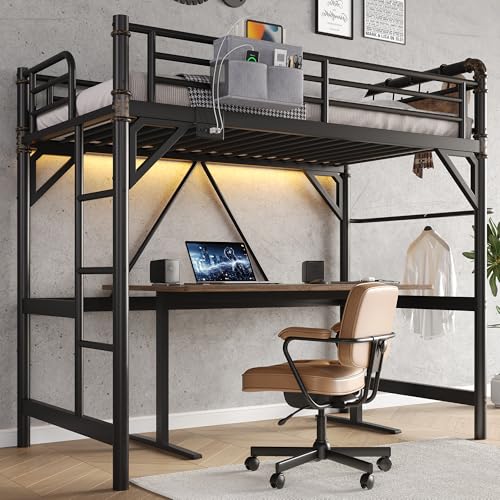
SMART RGB LIGHTS WITH MUSIC SYNC: This twin loft frame with built-in RGB LED light transforms your bedroom with over 16 million colors, 20+ light effects, and dynamic modes controlled by app or remote. Bold lights sync with music, setting the ideal vibe for relaxing, reading, or entertaining. From gentle nightlight for kids to vivid party colors, this twin bed frame makes every moment magical with immersive ambiance

🎪 Window Curtain &Cozy Secret Fort - The under-bed space features a window-shaped curtain and a built-in play desk. Kids can read, draw, or play in their own little world. The curtain-style cover can be rolled up or lowered to enjoy a private space
Custom vs. Ready-Made: Stability and Long-Term Use
You’re wondering if custom-built stability is worth the effort over a ready-made option, and here’s the thing: it fundamentally changes how the bed manages weight and wobble over decades. Custom beds achieve this with superior connection longevity, using reinforced joints and wall attachments that cut wobble by 90 percent. Proper stability also depends on routine inspections and tightening of all hardware, and securing the frame according to manufacturer instructions for safe anchoring.
Ready-made metal lofts counter with impressive engineering, often supporting 2,000 pounds. Their material durability is proven, but flat-pack designs can need added plywood to prevent flexing.
Your long-term use dictates the winner. Custom builds adapt precisely to your space and weight, while ready-made kits offer tested reliability with less fuss. For decades of solid sleep, prioritize a design whose inherent stability matches your daily life.

【Loft Bed with Storage and Stairs】:The heavy-duty loft system combines full size loft bed and four-step stairs shelves and a compact wardrobe all in one furniture piece. Sleek and space-saving design adds a touch of elegance to any bedroom. Ideal for any living environments, like children’s bedrooms, universities, residential treatment facilities, and bunkhouses.

Solid Square Tube Frame: The square is more durable & solid than the round in structure. Don’t worry about if the frame will be broken, the maximum bearing capacity can reach 400 lbs.

【Smart LED Lights, Charging Station & Storage】– Elevate your room with built-in LED light strips, perfect for immersive gaming or a relaxing ambiance. The integrated power strip features AC outlets and USB ports to keep your devices fully charged, while the thoughtful bedside storage pocket keeps your phone, glasses, and remotes neatly within reach