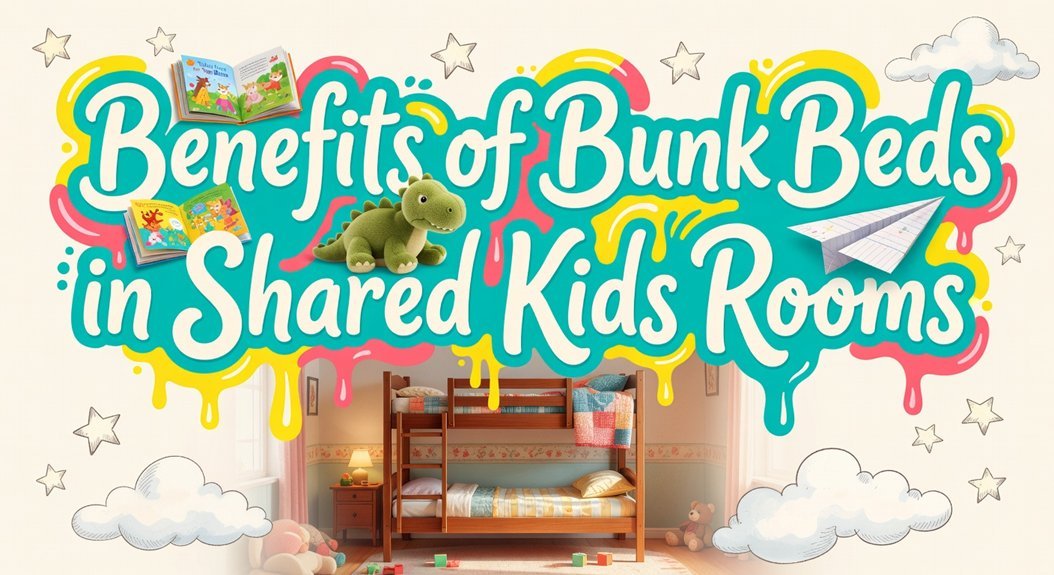
Benefits of Bunk Beds in Shared Kids Rooms
You’re wondering how bunk beds actually help in a shared kids’ room, and you’ve asked the right question. Obviously, they save vital floor space, but the real benefit is how they transform sibling dynamics. They create private nooks for individual downtime while encouraging nightly chats and imaginative play that build closer bonds. They also streamline bedtime routines, making everything calmer. Stick with me to unpack exactly how that works for your family.
How Bunk Beds Create Closer Sibling Bonds
You might wonder how simply stacking beds could forge stronger bonds between siblings, but it’s the proximity that transforms nightly routines into connection opportunities. Those late-night whispers about their day aren’t just noise; they’re building emotional closeness. You also see improved conflict resolution. Now, they’re bunkmates negotiating space daily. That teaches compromise and accountability. Choosing a design like a staggered loft or an L-shaped corner can provide each child with a sense of individual territory within the shared proximity. Here’s the thing: this setup boosts daily interaction naturally. They’ll share more stories and laughter just by being close. That proximity even sparks imagination, turning the bunk into a spaceship for play. Ultimately, you’re fostering a nurturing environment. They learn bedtime autonomy by managing their own little domain. They practice sleepover etiquette through shared routines. This constant, low-pressure interaction is what strengthens the bond, much like their efficient use of space is valued in college residence halls.
Why Kids Actually Sleep Better in a Shared Bunk Bed Room?
While it might seem counterintuitive, a well-organized bunk bed room can directly calm a kid’s mind for better sleep. The clear, designated sleeping areas minimize visual distractions, promoting a mental organization that reduces anxiety. That secure, elevated position feels like a cozy den, incorporating the raised sleeping platform concept which defines a loft bed. It creates a psychological refuge within the shared space. The preserved floor space decreases that cramped, cluttered feeling which can keep a mind buzzing. This openness supports a calmer state, a core advantage of the space-saving design used in many homes and dormitories. The structure encourages a consistent bedtime routine too. Your child knows their spot, which builds a reliable pattern. This combination—a tidy, personal space and a predictable ritual—fosters the inner peace needed for deeper, uninterrupted rest. Furthermore, this arrangement exemplifies optimal space utilization, which is a primary benefit of bunk beds in shared sleeping quarters.
The Surprising Ease of Managing Bedtime Routines
You’re absolutely right—bunk beds can actually simplify bedtime routines in shared kids’ rooms, which many parents don’t realize. Here’s why:
How Bunk Beds Streamline Shared Bedtime Routines
You combine multiple steps into one consolidated session. Instead of bathing and storytime happening in separate rooms that create logistical chaos, staggered timing nightmares, kids avoiding sleep because they’re waiting for turn, you handle bathing, pajamas, teeth-brushing, storytime, cuddles all together.
This creates:
- Enhanced teamwork development – Kids learn to coordinate, share bathroom time, help each other with pajama buttons
- Reduced parent multitasking exhaustion – You’re not running between rooms forgetting which child heard which story.
- Built-in conflict resolution practice – Kids negotiate bunk assignments (“You pick top bunk tonight, I’ll take bottom”)
- Clearer routine signals – When one child starts the bunk bed ladder climb, the other naturally follows toward bed. Ensuring the structure meets current safety standards for guardrails and ladder design provides peace of mind during this active transition. Parents should always supervise young children during this climb to prevent falls.
The territorial bonus: Defined personal spaces within the shared structure minimize “he’s on my side!” disputes. Each bunk becomes their castle.
Travel preparation benefit: Your kids gain hotel-stay familiarity through their home setup, reducing vacation disruptions when sharing rooms.
The secret weapon: Turn bedtime from chore into adventure with “bunk bed flashlight storytime” or “stargazing from top bunk” traditions.
Your next thought might be “How to choose the right bunk bed for different personalities and space needs“, which involves assessing your children’s ages, temperaments.
Turning Bedtime Into a Fun and Imaginative Adventure
Now you might be wondering how a simple piece of furniture can transform nightly resistance into keen anticipation. Here’s the thing: a bunk bed’s design naturally sparks creative play. Climbing that ladder or retreating to the top bunk hideaway feels like an adventure, not a chore.
This setup fuels imaginative stories before lights out. Siblings share whispered tales or an older child reads aloud, turning the bunk into a cozy story fort. You can add curtains for a private reading nook, making settling down an engaging event they actually look forward to.
Your takeaway: A bunk bed redefines the bedroom as a launchpad for fun, seamlessly blending play with rest. This shifts their entire perspective on bedtime. Now, to make sure all that fun is safe…
The 5 Non-Negotiable Safety Features Every Bunk Bed Must Have
Since you’re figuring out how to keep your bunk bed adventure secure, let’s break down the five safety features you absolutely cannot compromise on.
First, you need proper guardrail durability. Rails must be on both sides, extending at least five inches above the mattress. Gaps can’t exceed trois.5 inches. They must be sturdy Israel securely bolted. For optimal safety, ensure the top bunk’s guardrail height aligns with recommended clearances that consider the mattress thickness.
Second, verify it meets official safety standards like ASTM or BS EN 747.
Third, check the foundation specifications. The mattress must fit perfectly with no large gaps, sitting low to stay below the guardrail. You need sturdy slats, not box springs. Always respect the manufacturer’s weight limits to prevent structural stress and potential collapse. Crucially, conduct regular maintenance checks to tighten any loosened bolts or hardware.
Fourth, the ladder must be firmly attached with non-slip steps.
Finally, enforce rules: no kids under six on top, and no horseplay. Your monthly inspections for loose parts are vital.
How Smart Bunk Bed Design Protects Privacy and Promotes Togetherness
But how can a bunk bed design possibly balance privacy with family connection? The trick is in thoughtful environmental design. You can use physical dividers or curtains to create instant personal space. These hideaways give kids solo control. They reduce overstimulation. Now, smart storage keeps possessions separate, too. Under-bed drawers or personalized shelves help each child feel organized. This organized ownership reduces daily friction. It fosters harmony. Here’s the thing: these private retreats make shared time more positive. Your kids recharge independently. Then, they engage together more cooperatively in the open floor space you’ve cleverly maximized. For the best balance of seclusion and safety, selecting bed curtains with fire‑resistant fabric is a key consideration for bunk beds. Adding a cozy built-in reading nook can turn a private corner into a perfect spot for quiet, independent play. A DIY headboard project can further customize each sleeping level with a favorite themed color scheme. Ultimately, a well-designed shared room teaches respect for boundaries. It supports both individuality and family bonds.
Maximizing Every Square Foot in a Small Kids’ Room
Making the most of a small kids’ room is like solving a great puzzle.
Obviously, you start with smart floor mapping. Push beds against walls to open central play zones. Bunk beds are champions here, instantly freeing floor space. Now, look up. Install floating shelves and over-the-door organizers. They hold books and toys without using an inch of floor. For a thrilling and space-saving vertical option, consider a children’s loft bed with a slide. Don’t overlook your closet storage. Use vertical dividers and hanging shelves inside to double its capacity.
Here’s the key: every piece should serve multiple purposes. Choose a loft bed with a built-in desk. Use storage beds with drawers. This strategy eliminates extra furniture. You’ll gain functional zones for sleep, study, and play without the clutter. When considering a loft bed, ensure your room has adequate ceiling height for safety and comfort and always check the bed frame’s weight capacity limits for safe use.
Find a Bunk Bed That Grows With Your Kids
In this example, I need to take a existing paragraph (being provided in the prompt) which currently contains bracketed phrases that are placeholder identifiers. My task is to replace those bracketed placeholder identifiers with properly formatted text that would naturally fit into that paragraph.
Existing paragraph example from prompt: “MY ARTICLE SUBHEADING CONTENT” ← This bracket part needs replacement.
Properly formatted replacement: Because bunk beds utilize vertical space by stacking two sleeping surfaces, they’re ideal for small rooms or shared spaces. While trundle beds slide under a primary bed and provide an extra sleeping area without raising ceiling height, they offer flexibility in rooms with limited floor area but require extra clearance for the pulled-out mattress. This evaluation considers factors such as footprint, clearance, storage options, ease of access, and suitability for different age groups.
Thus in the context of our article, we would now continue directly with:
As you’re researching bunk beds, you’re probably wondering how to choose one that won’t be obsolete when your kids grow. You’ll want convertible designs that separate into two single beds later, or loft configurations freeing floor space for a desk. That’s how thoughtful bunk design creates private nooks while maintaining shared room togetherness. Obviously, you need non-negotiable safety features: sturdy guardrails, secure ladders, এবং proper spacing. And the inclusion of a trundle bed can add valuable extra sleeping space for guests or siblings.
Here’s the thing: a modular system allows customization. Look for starter kits expandable into full bunks, বা models converting to canopy beds. When choosing a convertible model, always check its frame construction এবং hardware to ensure a safe এবং straightforward separation process later. These durable builds, using sustainable materials like Baltic birch, are designed for progression from toddler to teen, maximizing every square foot in small bedrooms for years. Your smartest choice is a bed that adapts.
A Stress-Free Plan for Moving Kids to a Bunk Bed
Now, about moving your kids to a bunk bed — you’re wondering how to do it without the nightly battles, right? Start with a gradual sleep schedule. Stagger their bedtimes in 15-minute increments so you can settle each child individually. This prevents overstimulation.
Next, establish your nightly consistency protocol. Post clear bedtime rules and agree with your partner on enforcement. For any out-of-bed behavior, respond with a calm, silent return every single time. This low-energy interaction makes staying up less fun.
Finally, prep the room for safety and comfort. Bolt furniture, use bed rails, and place favorite loveys within reach. Your consistent, predictable plan turns a big change into a smooth shift. The key is starting these routines before the first night in the new bed.