

Can a 5’2 Person Fit Under a Loft Bed?
Yes, you’ll usually fit under a standard loft bed at 5’2” (62 inches), since most clearances range from 50-63 inches. But here’s the catch: that’s a tight fit for standing comfortably, especially with safety rails or a thick mattress overhead. Your ideal clearance is about 63 inches, so you’ll want to check your specific bed’s actual measurements. Let’s look at how to calculate that for your space.
Yes, a 5’2 Person Can Fit Under a Standard Loft Bed
Yes, a 5’2 person can fit under a standard loft bed. Yes, you’re wondering if you’d feel cramped under a loft bed, and it’s a smart question. Now, a 5’2” person is 62 inches tall. Standard loft clearance requirements typically offer 50 to 63 inches underneath. Here’s the thing: those headroom calculations mean you’d have at least an inch of space, so you’ll physically fit. But that minimal clearance might feel tight for prolonged standing. Obviously, you’d prioritize a loft with the higher end of that range. Look for specs around 63 inches for more comfort. Your height directly compares to that under-bed measurement. It’s also crucial to verify the weight‑capacity limits of the loft bed, especially if you plan to use the space underneath for seating or storage. When selecting a bed, carefully review the manufacturer’s standard dimensions to find a model with optimal clearance. A low-profile loft bed style, with its sleeping platform closer to 4 feet high, may offer a more comfortable clearance for your height. This gives you a clear starting point for your research. Next, you should consider what you’ll actually do in that space.
How to Calculate Your Ideal Under-Bed Clearance
You’re likely wondering how to figure out the perfect amount of space you’ll need under your loft bed. Start by getting your precise loft dimensions. Measure from the floor to the bed frame’s bottom, accounting for any slats. You’ll also consider adjustability factors, like beds that offer 3 to 30.5 inches of clearance. Remember to subtract caster height if you’re adding wheels. Now, think about your use. For just storage, a few inches works. For a desk, you’ll need about 30 inches for comfortable sitting, and ensuring proper clearance for your ceiling height is equally important to avoid a cramped feel. Many space-saving design options integrate the desk directly into the frame, optimizing the footprint. Always factor in a one-inch buffer below drawers to prevent scraping. This careful calculation guarantees your space is functional, not just a number on a tape measure. This planning phase is just as critical as the actual frame assembly when you build the bed yourself. Next, you’ll apply this to your room’s specific obstacles.

ESSENTIAL DORM ROOM ACCESSORY: This BedShelfie bedside shelf is made from eco-friendly, recyclable plastic and features the CableCatch model with a T-shaped cable organizer to manage multiple cables. With its modern matte finish and 2.8" clamp, it's the ideal space-saving solution for small spaces like bunk beds, lofts, or under mattresses—offering a stylish and organized nightstand or bedside tray.

[Considerate Bed Reading Light] This premium reading lamp for bed boasts a sturdy clip with a generous 2.36-inch opening and anti-slip pads, ensuring a secure grip on desks, bed headboards, dormitory beds without damage. Its versatile design makes it ideal for various settings, such as a bunk bed light, a clip lamp, a dimmable bed reading light, or even a workbench light. Plus a handy controller and a 30-min auto of timer, makes it a perfect reading light for bed headboard.

【All-in-One Multifunctional Gaming Loft Bed】This full size wood loft bed combines a spacious sleeping area on top with a fully equipped gaming or work station below. Available in vibrant Green, Red, Purple or Sky Blue, this gaming loft bed adds a pop of personality and modern flair to any bedroom or gaming setup. The versatile design allows the under-bed space to serve as either a functional gaming hub or a second sleeping area—adapting to your daily needs.
The Construction Formula Behind Loft Bed Height
Since you’re puzzling over how manufacturers determine loft bed dimensions, it’s all about a precise formula balancing your ceiling, your mattress, and your needs. They start with your ceiling height, subtract a minimum safety buffer (often 60 cm above the mattress), and then deduct your mattress thickness. This gives the maximum sleeping platform height.
Here’s the thing: your safety clearance and mattress choice directly dictate the bed’s leg height. That’s a core frame fabrication principle. A thicker mattress means shorter legs to keep you from hitting the ceiling.
Material selection considerations also factor in, as the frame’s strength must support this calculated height without flexing. Proper selection of sturdy construction materials like solid hardwoods or steel is critical for long-term stability. Your takeaway? The bed’s final height isn’t arbitrary; it’s engineered from your room’s fixed dimensions and your mattress. Manufacturers also design to key regulatory standards for safety. Parents should also consistently enforce safe sleeping practices, such as prohibiting rough play on the elevated bed.
How to Customize Your Loft Bed for a Perfect Fit
Anyone can build that perfect custom loft bed; you just need to know how to tailor the frame to your room and your height. Think about your access requirements. You can integrate a ladder using notched 2x4s, or position stair rails under the frame, ensuring you select a design like a sturdy straight or L-shaped ladder that complements your room layout. Always check the weight limits of your materials for safety. Now, consider bed mobility for assembly. The final build is heavy, so assemble it on the final room floor. You’ll customize the leg assembly and adjust spacer blocks on the long sides at 37-1/2 inches for support. Position your frame height for your needed clearance. Use shims around windows to seamlessly continue the frame line. You’re creating a personalized fit that works for your space. Planning the mattress platform height is key to balancing sufficient headroom below with comfortable access above. For maximum stability, anchor the perimeter frame securely to the wall studs using lag screws.

The product comes without HOOKS, please refer to the product images to get the extra HOOKS
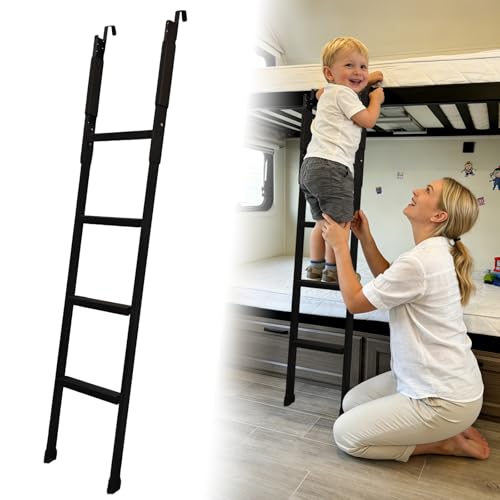
WIDE RANGE HEIGHT ADJUSTMENT: Our bunk bed ladder can be adjusted from 52 to 64 inches without cutting its legs. It features a unique design with 13 adjustment holes spaced 1 inch apart, offering a full 12 inches of flexible height customization. This allows for precise fitting to various bed heights and user needs with just one bunk ladder, far beyond just minor tweaks.

✅ Adjustable Height Without Cutting: Features 14-hole height adjustment (50" to 64") to fit most bunk beds, RVs, and loft beds—no cutting or extra tools needed.
3 Key Factors Beyond Height: Rails, Mattress, and Ceiling
While figuring out if you can physically fit under a loft bed is essential, you’re right to wonder about the other key details that make it livable. First, safety rails add 4-8 inches above the mattress, eating into your headroom. Their rail spacing design matters; a full perimeter rail consumes more space than a partial one. Second, your mattress thickness directly impacts clearance. Choosing a thin 6-inch mattress over a standard 12-inch one can recover 6 critical inches. Finally, you must measure your actual ceiling height. Ceiling slopes drastically change the available space at the bed’s location, not the room’s center. Combine these three factors in your calculation: ceiling height minus mattress and rail height equals your true usable space. You should also verify the bed’s maximum weight capacity when considering both the sleeper above and your activities at the desk below. For long-term safety and durability, prioritize beds built with solid hardwood frames over cheaper materials. When evaluating a model, its overall design aesthetics should also complement your room’s function and style to create a cohesive small space.

BUNKIE BOARD adds extra support under the mattress to help prevent the mattress from sagging bringing life to an old uncomfortable mattress

High Quality: Cot size sheets are made of high-quality microfiber, which is breathable, stretchy and silky soft. We will provide you a safe and comfy sleeping environment.

Adaptive Memory Foam Structure: Memory foam responds to body weight and temperature to match body curves. The foam features gradual rebound and reshapes naturally when body positions shift to deliver steady surface support. Weight is distributed evenly across the mattress surface for balanced contact during rest.