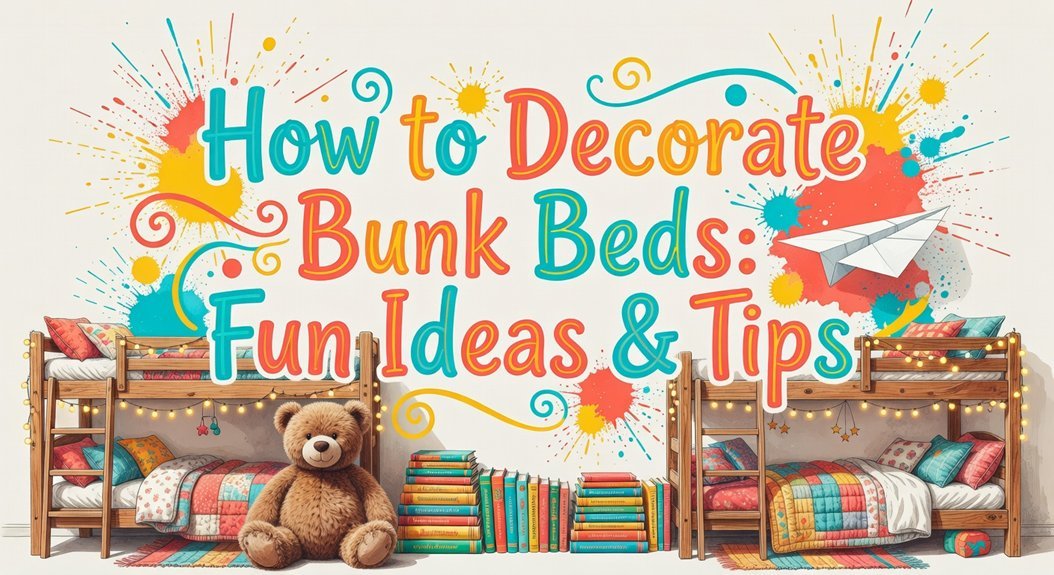
How to Decorate Bunk Beds: Fun Ideas & Tips
You’re wondering how to make bunk beds more than just stacked beds—great question. Start by picking a single, fun theme to guide all your choices, like a jungle or a calm sky. Then, add smart storage with under-bed drawers and DIY caddies, and use strategic lighting like clip-on lamps. Finally, don’t forget cozy details like privacy curtains and textured bedding to tie it all together. Your next step is figuring out which style fits your space best.
Choose Your Bunk Bed Style and Configuration
Feeling creative or need a spot for a desk বা bookshelf? Your bunk bed’s style dictates your room’s potential. You’ll often start with standard frames in a simple parallel arrangement—two beds stacked straight up. It’s the space-saving classic. Now, consider an L-shaped design. It tucks the bunks into a corner, freeing floor space underneath the top bunk for that desk. There’s also a U-shape, perfect if you need to fit three sleepers or want a cozy central play nook. For more kids, triple bunks stack three beds, sometimes reaching over 78 inches tall. Obviously, you’ll want full guardrails and sturdy ladders on any lofted bed, as safety features are a top priority in any family‑friendly purchase. For even more flexibility in tight quarters, explore a staggered loft design that can create distinct zones beneath each elevated bed. Maximizing functionality is also possible with specialty options like storage-integrated bunk beds. Start by mapping your room’s size and how many need to sleep there.
Maximize Functionality With Storage, Curtains, and Mirrors
You’ve chosen your bunk bed style, so now you’re wondering how to make it actually work for your space. Start by building in storage. Use those drawers under the bottom bunk, or opt for a model with built-in wardrobes. Floating shelves above the bed are brilliant for books, but remember to consider headroom clearance when placing them above a lofted sleeping platform.
Now, consider privacy curtains for the bottom bunk. They create a crucial sense of separation in a shared room, allowing for different activities at once. For a neat look on elevated beds like bunks, you can use a hospital‑corner technique to keep your fitted sheets perfectly taut.
Here’s the trick: hang storage mirrors on the wall opposite the beds. They’ll reflect light and visually double the room’s size. Combine these elements, and you’ve maximized function without clutter. Keep everything tidy and compact by mastering techniques for folding fitted sheets to maximize your limited drawer or wardrobe space. Ready to think about the overall look next?
Select a Theme for Your Bunk Bed Decor
Your takeaway? Pick one core concept you love. That focus simplifies everything else. This single theme can then inspire the addition of playful interactive elements like slides or climbing ladders. It also simplifies the choice of age-appropriate accessories for a cohesive look. Next, you’ll build on it with your color palette. Just as with compact plant varieties, a focused selection creates harmony and maximizes your space. This approach works well in homes and popular shared spaces like college residence halls.
Pick Your Bunk Bed Color Palette and Mix Textures
Now we’ve got that core theme, you’re probably wondering how to actually bring it to life. Here’s the thing: your color palette and textures do the heavy lifting.
Start with your base. Obviously, a calm, neutral palette with soft grays or beiges creates a timeless, airy feel. You can use neutral bedding as that restful foundation. For energy, paint the bunks a vibrant turquoise against white walls. Consider how this color interacts with the finish of your bed, whether it’s a warm wood tone or a sleek metal frame. When selecting a metal bunk bed, prioritize models that meet rigorous safety standards for stability. For a truly personalized look, explore beds offering customization possibilities in color and finish.
The real magic is in pattern mixing and layers. Combine stripes with polka dots in your chosen palette. Add depth with different textures—a quilted blanket over a smooth sheet, plus some fun throw pillows. This builds eclectic charm without clutter. Your clear takeaway? Choose a cohesive color story first, then play with patterns and fabrics for a room that feels complete and personal.
Accessorize With DIY Details and Fun Accents
Now, if you’re wondering how to make all that pattern and texture mixing actually feel personal, here’s the thing: you’ll do it with accessories and DIY touches.
Personalize directly with a DIY caddie hanging from the side rail. It’s your catch-all for books and bedtime items. Customizable fabric pockets can be sized to hold everything from water bottles to book lights. Even safety upgrades add style. Use patterned ladder grips; they’re practical but boost your theme. For a more integrated storage solution, consider installing versatile floating shelves for books and decorations. For small items that need a dedicated spot, look for compact wall‑mounted shelves that are specifically designed for bunk beds. Consider adding a themed wall decal to the surrounding wall space for an extra pop of personality.
Your wall space and floor matter too. Add a small rug for comfort and hang art you love. A clip-on lamp gives you perfect reading light. These final layers make the bed truly yours.
You’ve built the foundation, so now the fun begins. How do you tailor each bunk for different personalities?
How Do You Theme Each Bunk Bed for Different Kids?
How Do You Theme Each Bunk Bed for Different Kids?
You’ve got different kids, so you need different themes. Smart move. This theme diversity is key to a peaceful, happy room.
Start by embracing soft pastels for calm, creative kids who need a serene sleep space. You’ll use gentle pinks or soft whites. This age-flexible design grows with them. For your dreamer, build a sky theme. Add glow-in-the-dark stars or a rainbow. They’ll love sleeping in the clouds. Kid personalization means asking for their favorite character input.
Now, for your energetic adventurer, go jungle. Use vibrant greens and Tarzan motifs. It channels their energy creatively. Want modern style? Use geometric patterns or a puzzle sideboard. Let each child’s personality lead.
Your takeaway: Match the theme to the child’s core traits. Next, you’ll make those themes feel immersive.
Craft a Cozy Tree House or Castle Feel
Drape floral garlands and weave in fairy lights. These details build magic. They transform a simple bed into an imaginative platform. The cozy space under the bottom bunk becomes a hidden nook. When decorating, prioritize age-appropriate features from your loft bed’s design for both safety and sustained imaginative play. For example, a built-in desk can serve as a charming window ledge or a treasure map table within the themed space. Your goal is full immersion. Blend those painted scenes with tangible, rustic materials. Now, your kids’ retreat sparks real adventure every night. When securing heavier decorative elements, ensure your chosen bunk bed model has a robust solid hardwood construction to safely support the added weight.
Build a Serene Neutral or Farmhouse Retreat
Now, amplify the coziness with clever cozy features. Consider beadboard headboards for privacy or bunk curtains for a vintage look, ensuring they are made from fire-resistant fabrics for safety. Always check that any curtains or fabrics do not interfere with the guardrail placement to prevent falling risks. You’re building a retreat, so details like recessed cubbies for books make it functional. Your goal is a unified, peaceful haven. It feels both modern and rustic. Next, you’ll decide if a built-in design could enhance this serene foundation.
Opt for a Built-In or DIY Bunk Bed Design
You’re wondering if you should build bunk beds into the wall or go with a standalone DIY kit—it’s a big design choice that shapes the whole room. A true built-in offers a custom, seamless look. You’d construct both platforms in place, using precise framing techniques for a perfect fit.
Which design gives better support?
Focus on structural stability. For a top bunk, you’ll need sturdy, secured framing to create a safe floating platform. Here’s the thing: your framing techniques prevent wobble. A DIY kit is simpler but less integrated.
Your key consideration is permanence versus flexibility. A built-in is a lasting room solution, while a kit can be moved. Next, you’ll secure the final safety and access details.
Add Finishing Touches: Lighting, Art, and Soft Furnishings
Maybe you’re wondering how to make those clean-lined bunk beds feel cozy and personalized without cluttering up the limited space. The secret is in smart layering. Start with strategic lighting. Clip-on lamps or LED tubes under the top bunk give perfect task light. String lights add ambient glow without wasting floor space. Consider lighting automation for easy control from below. Next, manage acoustic considerations with plush rugs or thick curtains. They soften noise and add texture. Finally, use the bed frame itself. Hang lightweight art or small shelves on the side rails for personal treasures.
Your takeaway? Build up, not out. Now, how will you reflect each sleeper’s unique style?