

Are Murphy Beds Dangerous? What You Need to Know
You’re right to question those scary movie scenes. Honestly, Murphy beds are safe when installed correctly, and fatal accidents are incredibly rare—just three documented cases in decades. The real risk isn’t the design but improper setup; a 2022 recall of 8,200 beds caused 62 injuries from wall detachment. Your safety hinges on professional installation into wall studs. Let’s unpack how modern engineering and smart habits make all the difference.
Are Murphy Beds Dangerous? The Reality Behind the Fear
You’re probably wondering if Murphy beds are genuinely dangerous or if the horror stories are overblown. Now, those movie depictions of chaotic, crushing beds are mostly dramatic fiction—the equivalent of bedside pranks. Here’s the reality based on incident data. Fatal accidents are rare, freak events, with only three documented cases in decades. Obviously, they’re statistically less dangerous than everyday household hazards. But injuries do happen; the CPSC recorded 146 incidents from one recalled model alone, including broken bones and concussions. Children face a higher risk. A key preventative measure is ensuring the bed is never loaded beyond its safe weight capacity, which includes the combined weight of sleepers, mattress, and bedding. To verify this, always check the manufacturer’s weight specifications provided for your specific model. Your takeaway? Modern, well-made beds are far safer than their century-old predecessors. The real danger often comes from how they’re installed and used, not the design itself, with risks increasing due to factors like improper assembly or worn hardware. Next, let’s break down those specific safety hazards.
Top 5 Murphy Bed Safety Hazards and How They Happen
So, what makes Murphy beds risky in real life? Let’s move past common misconceptions and urban myths. The hazards are specific and often stem from installation or design. Here are the top five.
Hazard 1: It detaches from the wall.
Improper installation is a leading cause. If you don’t secure it to wall studs, the entire unit can detach. Particle board construction can also fail, as this inferior material cannot withstand the long-term demands of a Murphy bed. This happened with 129,000 Bestar units, leading to a recall after 60 incidents and one death. Always get professional installation. A thorough DIY guide emphasizes the critical need for wall reinforcement and proper mounting hardware. If you ever need to move or service the bed, safely disassemble the hardware following a clear, step-by-step guide.
Hazard 2: The mechanism fails.
Faulty pistons or springs can cause a sudden drop. Inferior hardware can’t support the weight. This risk increases with overcomplicated mechanisms or old, second-hand beds where parts have deteriorated. A mechanism failure is unlikely to cause direct injury, but primarily creates operational difficulty. Correcting the issue often requires a proper review of the pivoting mechanism.
Hazard 3: You misuse it.
Overloading the bed or using an oversized mattress strains the structure. Rough handling or ignoring instructions compromises safety. Even over-stuffing with pillows can disrupt the balance needed for safe operation.
Hazard 4: You get pinched or trapped.
The folding process creates pinch points for fingers, hands, or even pets. Children can be entrapped between the bed and wall if safety locks aren’t engaged. You must always clear the area before moving the bed.
Hazard 5: The materials or design are poor.
Cheap particle board weakens. A lack of safety locks permits unintended opening. Inadequate counterbalance allows sudden drops. Statistical comparisons show these design failures are behind many real-world accidents, not the urban legend of spontaneous collapse. Choosing a reputable brand with real wood construction is a fundamental solution to these material risks.
Your takeaway: These hazards happen through identifiable errors, not mystery. Now, let’s see how modern engineering directly addresses each one.

【SUPERIOR REBOUND FORCE】- One person can freely fold out or up the bed. Inside 5 premium springs, high rebound strength to ensure the whole process.

Horizontal Mount Queen Size Full Size Twin size Deluxe Murphy Bed Hardware Kit(for the small size bed,just reduce the springs in the housing if they are too strong)
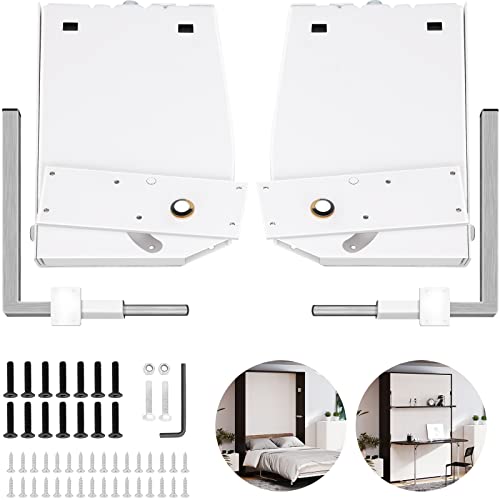
【SUPERIOR REBOUND FORCE】- One person can freely fold out or up the bed. Inside 9 premium springs, high rebound strength to ensure the whole process.
How Modern Murphy Beds Are Engineered to Prevent Accidents
Now, if you’re wondering how those scary hazards are actually prevented, modern engineering tackles each one directly with specific, evolved features. Hydraulic and piston systems replace old springs, providing a slow, controlled descent. This includes soft close technology to stop any abrupt slamming. For a secure upright position, you’ve got mandatory safety locks. These hold the bed’s full weight, an essential feature with kids around. The entire frame uses heavy-duty steel and anti tip engineering for rock-solid stability. This precision design evenly distributes weight, preventing dangerous shifts. Motors add obstacle sensors and auto-deploy legs for perfect alignment. Many models also feature versatile design options that allow the unit to integrate seamlessly into a multi-purpose room when not in use. All these components undergo strict third-party testing and safety certifications to meet rigorous standards. You’re looking at a system built with multiple, overlapping safeguards for true peace of mind. It is crucial to assess your available wall structure to ensure it can properly support the bed’s weight and mechanism.
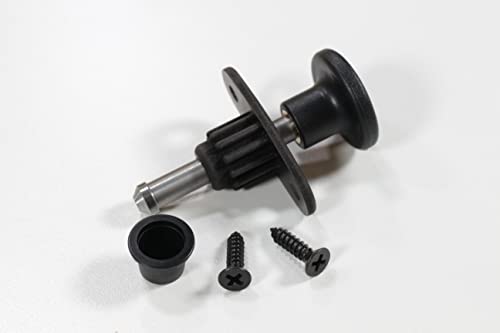
Cabinet lock kit includes all the parts and is designed to secure the Murphy bed frame in the closed position to help prevent unintentional opening

Hydraulic system: Equipped with heavy-duty two-stage gas springs at both ends, it operates smoothly and easily when raising or lowering the Murphy bed, and achieves mid air hovering

Durable Materials and Strong Support:This queen Murphy bed is built with industrial-grade MDF, plywood, and a reinforced metal frame for long-term durability. The slatted mattress base provides balanced support and improves airflow. The structure supports up to 1,000 pounds and fits most standard queen mattresses sized 60 by 80 inches and no thicker than 12 inches including pillows
The #1 Rule for Murphy Bed Safety (It’s Not What You Think)
While all those engineering details are important, the number one rule for Murphy bed safety isn’t about mechanisms or weight limits.
It’s professional installation.
You can’t DIY this safely. You must secure the cabinet to wall studs with the exact hardware provided. A pro guarantees level mounting for even weight distribution, preventing dangerous shifting. They also spot early signs of material fatigue in components, something you’d easily miss. For instance, a trained installer will verify the integrity of the reinforced back panel, a critical structural modification that DIY instructions often include. A professional’s deep familiarity with the lifting mechanism ensures precise calibration for safe and smooth operation over the long term, and they can advise on proper clearance measurements to ensure the bed operates without obstruction.
This step validates every other safety feature. Without it, even a perfectly engineered bed can fail. Your clear path forward is simple: prioritize hiring a certified installer. It’s the foundational action that makes all other precautions effective.
A Case Study in Failure: Understanding the 2022 Murphy Bed Recalls
Since you’re wondering how even a well-known product can go so wrong, the 2022 recalls of around 8,200 Cyme Tech murphy beds show exactly what happens when critical safety layers fail. The beds, sold through major retailers like Wayfair, broke or detached from walls, causing 62 injuries including broken bones. This highlights the critical importance of proper wall‑mounted support to safely bear the mechanism’s weight. A failure to use proper stud anchoring and hardware can lead directly to catastrophic detachment. This weight includes not just the frame but also the mattress, so verifying the mattress thickness is compatible with your specific mechanism is a critical safety step.
This case reveals the recall psychology challenge. Wide online distribution made direct notification tough, undermining consumer trust. Your consumer perception of a brand like Ivy Bronx shifts when you see a $1,500 bed can collapse.
Now, the manufacturer offered free repairs. But the scale—146 incident reports—demonstrates a systemic failure. The takeaway? A recall itself signals the hazard, but its execution defines your ongoing safety. Next, you’ll need to understand what makes a proper installation fundamentally different.

🛏️【Complete Queen-Vertical Murphy Bed Kit】Finished size reference: 87-1/8-inch H x 65-7/8- inch W x 15-7/8- inch D (closed) x 87 inches deep (open).A complete Murphy bed queen hardware kit can easily mount your cabinet folding bed on the wall and save space for your guest room & living room.

𝐂𝐎𝐌𝐏𝐋𝐄𝐓𝐄 𝐇𝐎𝐑𝐈𝐙𝐎𝐍𝐓𝐀𝐋 𝐌𝐔𝐑𝐏𝐇𝐘 𝐁𝐄𝐃 𝐇𝐀𝐑𝐃𝐖𝐀𝐑𝐄 𝐊𝐈𝐓 — EVERYTHING TO BUILD YOUR FULL SIZE WALL BED — Includes gas piston lift mechanism calibrated for side-fold operation (smooth open/close rated for daily use), patented 2-in-1 auto-locking stainless steel pivot plates, heavy-duty folding crossbar leg system, quick-release mattress retention strap, all mounting hardware and fasteners, plus 3 illustrated guidebooks (Horizontal Cut List Guide, Construction Guide, Assembly Handbook). No separate hardware store runs needed for the murphy bed mechanism components.
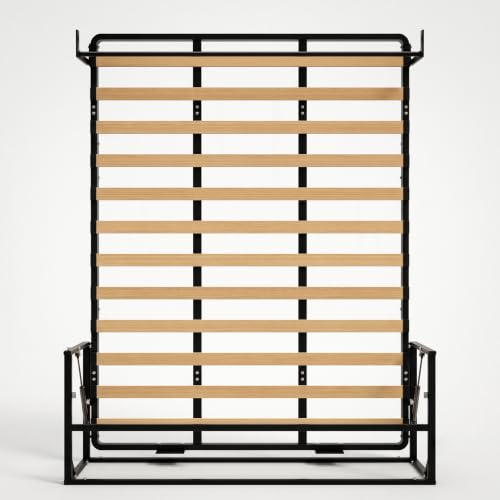
Complete Murphy Bed Kit: Unlike many other wall bed kits, our wall bed frame hardware kits include a sturdy steel platform with comfortable cambered wood slats to support your mattress.
Murphy Bed Installation Guide: The Non-Negotiable Steps for Safety
Let’s talk about the non-negotiables for installing a Murphy bed safely. You’ve got to start with the foundation. Before anything else, verify your wall can take the load—this is critical installation methodology verification. Use a stud finder to locate solid wood or metal studs, typically 16 inches apart. Plaster or drywall alone won’t hold it. A high-quality mattress is also essential for long-term comfort and support.
Your assembly tool selection matters. Use a screwdriver or low-speed drill to avoid overtightening connectors. Always get a helper to lift the cabinet. You must anchor the frame directly into those studs with heavy-duty hardware. Consider that professional installation fees are a common factor in the overall cost, but they ensure expertise for critical steps like secure anchoring. For complex setups or high-end custom units, obtaining multiple quotes from reputable installers is a smart budgeting step.
Finally, test everything. The bed must fold smoothly and lock securely. Establish a consistent folding schedule to minimize mechanical wear and ensure reliable operation. If you have any doubt about stability, stop and call a professional. Don’t guess with safety.

COMPLETE SET FOR VARIOUS MOUNTING NEEDS: This Heavy Duty Toggle Bolts Assortment Kit includes 164 pieces of drywall anchors, toggle bolts, and screws in multiple sizes to fit different installation requirements. The set contains 40pcs #6×1", 40pcs #5×1", 40pcs #7×1", 20pcs #6×1-1/5", 12pcs #8×1-3/5", and 20pcs black #8×1-1/4" wall anchors, along with toggle bolts in 1/4" (4pcs), 3/16" (12pcs), and 1/8" (16pcs). Ideal for mounting shelves, mirrors, or curtain rods.

3 SIZES FOR EVERYTHING – PHOTO FRAMES TO TVs: 1.18"(1-3/16") for photos & small decor, 1.38"(1-3/8") for shelves & mirrors, 1.76"(1-9/16") for TVs & heavy items.No guesswork-just match the drywall anchors to your wall thickness and what you're hanging. Supports up to 100 lbs+ without fail

PREMIUM NYLON WITH GLASS FIBER STRENGTH – Crafted from tough, high-grade nylon combined with robust glass fibers, these self-tapping wall anchors are built to last. Designed to hold up to 75 lbs, they offer a firm grip in the wall, perfect for hanging art, photo frames, paintings, shelf brackets, or curtain rods. The set includes 70 galvanized Phillips screws to ensure a strong, secure installation and reliable mounting.
Daily Use Tips to Keep Your Murphy Bed Safe and Reliable
Now, for Proper Operation. You’ll use both hands for a controlled motion—never rush it. Obviously, this requires strict Child Supervision. Never let kids operate it alone. Follow the weight limits, usually 500-600 lbs. Use a mattress under 12 inches thick, and keep bedding streamlined. To ensure compatibility, always choose a low-profile mattress specifically designed for folding bed mechanisms, and consider the benefits of a custom-designed foam mattress for optimal fit and comfort.
Regularly inspect hardware and tighten loose screws. These simple habits maintain reliability. They make your bed a safe, seamless part of your room.
Murphy Bed Safety vs. Everyday Hazards: What’s Actually Riskier?
Comparing Murphy bed risks to ordinary household hazards reveals a surprising reality. You might have heard scary stories, but that’s often risk exaggeration. Here’s the thing: a properly installed modern Murphy bed isn’t more dangerous than your other furniture.
Common safety misconceptions blow rare incidents out of proportion. Statistics show greater dangers from frayed cords or space heaters. Most accidents stem from improper installation or faulty, recalled models—not inherent design flaws.
Your everyday stairs or a tipped bookshelf pose a far more consistent threat. Focus on proper installation and a quality product. Then, the bed’s risk becomes negligible compared to true household hazards you already manage.
Your Pre-Purchase Checklist for a Truly Safe Murphy Bed
So you’re researching Murphy beds and want to make sure your choice is truly safe—that’s exactly where to start.
What should I look for before buying?
Prioritize certification checks for manufacturer standards. Always verify weight capacity, aiming for over 2,000 lbs for a major safety buffer. Material verification is key; real wood construction vastly outperforms particle board.
How do I guarantee safe installation?
Plan for professional installation. Trained specialists secure the frame to at least three wall studs, preventing dangerous tipping. Don’t rely on drywall.
Your checklist must include robust safety latches and premium hardware. Now you can shop with confidence, focusing on brands that build safety in.

TIME TESTED: Our kits have stood the test of time for over 35 years. If you’re going to build a high-quality murphy bed, you want it to last a lifetime. American-made steel, labor, and support are behind each kit.

𝐂𝐎𝐌𝐏𝐋𝐄𝐓𝐄 𝐌𝐔𝐑𝐏𝐇𝐘 𝐁𝐄𝐃 𝐇𝐀𝐑𝐃𝐖𝐀𝐑𝐄 𝐒𝐘𝐒𝐓𝐄𝐌 — WHAT’S IN THE KIT — Includes gas piston lift system (smooth open/close rated for daily use), patented 2-in-1 auto-locking stainless steel pivot plates, heavy-duty square tube folding legs, quick-release mattress retention strap, all mounting hardware and fasteners, plus 3 fully illustrated guidebooks (Cut List Guide, Construction Guide, Assembly Handbook). No separate hardware store runs needed for the mechanical components.
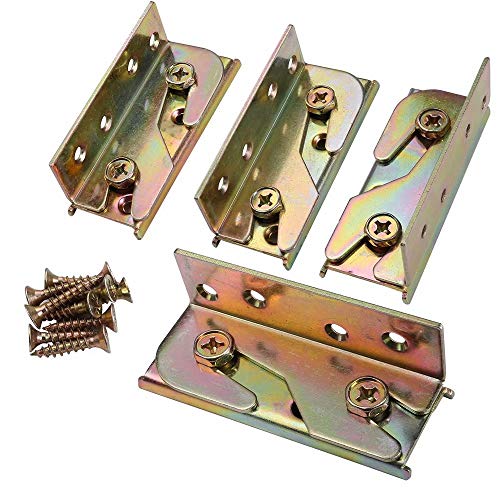
PURPOSE: Be widely used for wooden bed frames, bed rails, headboards, footboards, bunk bed ladders, and even other wooden furniture. These are also great for those of you who might move a lot and need a quick/ easy disassembly